girayo 'nnaṁ catur-vidham
sindhavo ratna-nikarān
girayo 'nnaṁ catur-vidham
upāyanam upājahruḥ
sarve lokāḥ sa-pālakāḥ
The oceans offered heaps of jewels, mountains offered four kinds of food and all the planets and their lords offered gifts.
|| 4.19.10 ||
iti cādhokṣajeśasya
pṛthos tu paramodayam
asūyan bhagavān indraḥ
pratighātam acīkarat
Envious of the high prosperity of Pṛthu, who was the Supreme Lord, Indra obstructed the sacrifice.
Instead of prṭhos tu the words pṛthos tad is sometimes seen.
|| 4.19.11 ||
carameṇāśvamedhena
yajamāne yajuṣ-patim
vainye yajña-paśuṁ spardhann
apovāha tirohitaḥ
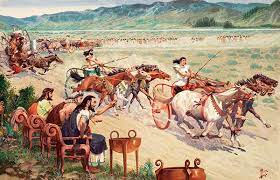
When Pṛthu was worshipping Viṣṇu with the last horse sacrifice, envious Indra with an invisible form stole the horse.
Yajuḥpatim means Viṣṇu. Apovāha means “he stole.”
|| 4.19.12 ||
tam atrir bhagavān aikṣat
tvaramāṇaṁ vihāyasā
āmuktam iva pākhaṇḍaṁ
yo 'dharme dharma-vibhramaḥ
Atri saw Indra moving quickly in the sky in the dress of a heretic, who by that disguise made people think adharma to be dharma.
Afraid of being seen, Indra was fleeing away quickly, and wearing (āmuktam) the dress of a heretic like armor. Amara-koṣa says that āmukta means until liberation or dressed.” By him there was an illusion of dharma with what was actually adharma
|| 4.19.13 ||
atriṇā codito hantuṁ
pṛthu-putro mahā-rathaḥ
anvadhāvata saṅkruddhas
tiṣṭha tiṣṭheti cābravīt
Encouraged by Atri to kill him, the son of Pṛthu, a great warrior, followed him in anger. He said, “Stop! Stop!”
|| 4.19.14 ||
taṁ tādṛśākṛtiṁ vīkṣya
mene dharmaṁ śarīriṇam
jaṭilaṁ bhasmanācchannaṁ
tasmai bāṇaṁ na muñcati
Seeing him in that dress, with matted locks and smeared in ashes, Pṛthu’s son thought he must be a religious person. He did not shoot him.
He thought, “The person with this dress must being following dharma somewhat, from seeing Śiva or others.”
|| 4.19.15 ||
|