kuśāmbus tanayo vasuḥ
balākaś cātmajo 'jakaḥ
tataḥ kuśaḥ kuśasyāpi
kuśāmbus tanayo vasuḥ
kuśanābhaś ca catvāro
gādhir āsīt kuśāmbujaḥ
The son of Jahnu was Puru, the son of Puru was Balāka, the son of Balāka was Ajaka, and the son of Ajaka was Kuśa. Kuśa had four sons, named Kuśāmbu, Tanaya, Vasu and Kuśanābha. The son of Kuśāmbu was Gādhi.
|| 9.15.5-6 ||
tasya satyavatīṁ kanyām
ṛcīko 'yācata dvijaḥ
varaṁ visadṛśaṁ matvā
gādhir bhārgavam abravīt
ekataḥ śyāma-karṇānāṁ
hayānāṁ candra-varcasām
sahasraṁ dīyatāṁ śulkaṁ
kanyāyāḥ kuśikā vayam
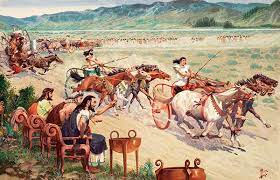
King Gādhi had a daughter named Satyavatī, whom a brāhmaṇa sage named Ṛcīka requested from the King to be his wife. King Gādhi, however, regarded Ṛcīka as an unfit husband for his daughter, and therefore he told the brāhmaṇa, "My dear sir, I belong to the dynasty of Kuśa. Therefore, bring at least one thousand horses, each as brilliant as moonshine and each having one black ear, as a dowry."
It will be explained in a later chapter that the son of Gadhi, Viśvāmitra, became a brahmarṣi. In order to tell about the avatāra Paraśurāma coming in the dynasty of the daughter, first the story of the sage Ṛcīka is told. We are kṣatriyas of the Kuśa dynasty, very elevated. The horses should have one black ear, either left or right.
|| 9.15.7 ||
ity uktas tan-mataṁ jñātvā
gataḥ sa varuṇāntikam
ānīya dattvā tān aśvān
upayeme varānanām
When King Gādhi said this, the sage could understand the King's mind. Therefore he went to Varuṇa and brought from him the one thousand horses and gave them to Gādhi. He then married the King's beautiful daughter.
|| 9.15.8 ||
sa ṛṣiḥ prārthitaḥ patnyā
śvaśrvā cāpatya-kāmyayā
śrapayitvobhayair mantraiś
caruṁ snātuṁ gato muniḥ
Thereafter, Ṛcīka's wife and mother-in-law, each desired a son. He cooked sacrificial rice with mantras for both, and went to bath.
He cooked rice for his wife with brāhmaṇa mantras and rice with kṣatriya mantras for his mother-in-law.
|| 9.15.9 ||
|