pariṣvajya ciraṁ dorbhyāṁ
mātṛ-mṛṣṭam alaṅkṛtam
After some time, the teacher, understanding that Prahlāda Mahārāja had learned the subjects of pacifying public leaders, appeasing them by giving them lucrative posts, dividing and ruling over them, and punishing them in cases of disobedience, brought him to Hiraṇyakaśipu, after he was bathed and decorated by his mother.
Jñāta-jñeya-catuṣṭayam means Prahlāda who had learned four subjects worthy of learning—the four methods of sāma, dāna, bheda and daṇḍa.
|| 7.5.20 ||
pādayoḥ patitaṁ bālaṁ
pratinandyāśiṣāsuraḥ
pariṣvajya ciraṁ dorbhyāṁ
paramām āpa nirvṛtim
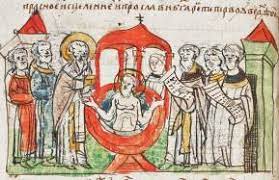
Welcoming the body who fell at his feet with blessings, the demon father embraced him for a long time with his arms and felt great happiness.
|| 7.5.21 ||
āropyāṅkam avaghrāya
mūrdhany aśru-kalāmbubhiḥ
āsiñcan vikasad-vaktram
idam āha yudhiṣṭhira
O King Yudhiṣṭhira! Hiraṇyakaśipu, seating Prahlāda Mahārāja on his lap and smelling his head, while moistening him with his tears, spoke to smiling Prahlāda.
|| 7.5.22 ||
hiraṇyakaśipur uvāca
prahrādānūcyatāṁ tāta
svadhītaṁ kiñcid uttamam
kālenaitāvatāyuṣman
yad aśikṣad guror bhavān
Hiraṇyakaśipu said: My dear son Prahlāda with long life! You should favorably say the excellent knowledge that you have learned from your teacher.
Svadhītam means “what you have studied without having doubts.” Anu means favorably, conforming to what they taught. The teacher refers to the son of Śukrācārya from Hiraṇyakaśipu’s point of view, but it refers to Nārada from Prahlāda’s point of view.
|| 7.5.23-24 ||
śrī-prahrāda uvāca
śravaṇaṁ kīrtanaṁ viṣṇoḥ
smaraṇaṁ pāda-sevanam
arcanaṁ vandanaṁ dāsyaṁ
|