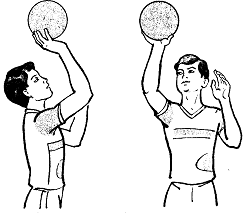
Заглавная страница Избранные статьи Случайная статья Познавательные статьи Новые добавления Обратная связь FAQ Написать работу КАТЕГОРИИ:  Археология Археология Биология Биология Генетика Генетика География География Информатика Информатика История История Логика Логика Маркетинг Маркетинг Математика Математика Менеджмент Менеджмент Механика Механика Педагогика Педагогика Религия Религия Социология Социология Технологии Технологии Физика Физика Философия Философия Финансы Финансы Химия Химия Экология ЭкологияТОП 10 на сайте Приготовление дезинфицирующих растворов различной концентрацииТехника нижней прямой подачи мяча. Франко-прусская война (причины и последствия) Организация работы процедурного кабинета Смысловое и механическое запоминание, их место и роль в усвоении знаний Коммуникативные барьеры и пути их преодоления Обработка изделий медицинского назначения многократного применения Образцы текста публицистического стиля Четыре типа изменения баланса Задачи с ответами для Всероссийской олимпиады по праву 
Мы поможем в написании ваших работ! ЗНАЕТЕ ЛИ ВЫ?
Влияние общества на человека
Приготовление дезинфицирующих растворов различной концентрации Практические работы по географии для 6 класса Организация работы процедурного кабинета Изменения в неживой природе осенью Уборка процедурного кабинета Сольфеджио. Все правила по сольфеджио Балочные системы. Определение реакций опор и моментов защемления |
The conjunction is a part of speech which denotes connections between objects and phenomena. It connects parts of the sentence, clauses, and sentences.Поиск на нашем сайте Chapter X
THE MODAL WORDS § 1. The modal words express the attitude of the speaker to the reality, possibility or probability of the action he speaks about. § 2. According to their meaning modal words fall under the following main groups: (1)words expressing certainty (certainly, surely, assuredly, of course, no doubt, apparently, undoubtedly, etc.); (2)words expressing supposition (perhaps, maybe, possibly, probably, etc.); (3)words showing whether the speaker considers the action he speaks about desirable or undesirable (happily — unhappily; luckily — unluckily ;fortunately — unfortunately). § 3. In the sentence modal words are used as parentheses.1 Sometimes they are used as sentence-words.2 Certainly you'll admit we could finish all this in a month. (Wilson) "Will you allow me to detain you one moment," said he. "Certainly," replied the unwelcome visitor. (Dickens) § 4. Most modal words have developed from adverbs, so very often there exists a formal identity between modal words and adverbs. For instance such modal words as certainly, surely, happily are homonymous with the adverbs certainly, surely, happily. Such modal words as possibly, probably, indeed, also derived from adverbs, have no corresponding homonymous adverbs because the latter ceased to be used in Modern English. Though formally identical with adverbs, modal words differ from them in meaning and syntactical function. See Chapter XV, The Simple Sentence. 2Modal words used as sentence-words are similar to the words yes and no expressing affirmation and negation, which are also sentence-words. If he were not married as happily as he was, might not something come of it? (Dreiser) (ADVERB) ... she hauled me to the washstand, inflicted a merciless, but happily brief scrub on my face and hands with soap water, and a coarse towel... (Ch. Bronte) (MODAL WORD) Lamlein rose. "We have fulfilled our obligations," he said pompously, and yet not quite certainly. (Heym) (ADVERB) Soames smiled. Certainly, uncle Jolyon had a way with him. (Galsworthy) (MODAL WORD) Slowly, surely, with the secret inner process that works the destruction of an old tree, the poison of the wounds to his happiness, his will, his pride, had corroded the comely edifice of his philosophy. (Galsworthy) (ADVERB) Over the ridge she would find him. Surely she would find him over the ridge. (Wells) (MODAL WORD)
Chapter XI THE INTERJECTION § 1. The interjection is a part of speech which expresses various emotions without naming them.
§ 2. According to their meaning interjections fall under two main groups, namely emotional interjections and imperative interjections. 1. Emotional interjections express the feelings of the speaker. They are: ah, oh, eh, bravo, alas, etc. ... A man jumped on top of the barricade and waving exuberantly shouted, "Americans! Hurrah!" (Heym) (joy) Alas! The white house was empty and there was a bill in the window "To let". (Dickens) (sorrow) Psha! There's no possibility of being witty without a little ill nature. (Sheridan) (contempt) Oh, bother! I can't see anyone now. Who is it? (Shaw) (indignation) "Dear me!" says Mr. Chillip meekly smiling with something shining in his eyes. (Dickens) (surprise) 2. Imperative interjections show the will of the speaker or his order or appeal to the hearer. They are: here, hush, sh-sh, well, come, now, etc. Here! I've had enough of this. I'm going. (Shaw) (protest) "Upon my word I was not awake, sir," replied Oliver earnestly. "I was not, indeed, sir." "Tush, tush, my dear!" said the Jew abruptly resuming his old manner. (Dickens) (order)
§ 3. Interjections may be primary and secondary. 1. Primary inteijections are not derived from other parts of speech. Most of them are simple words: ah, oh, ehf pooh, hum, fie, bravo, hush. Only a few primary interjections are composite: heigh-ho! hey-ho! holla-ho! gee-ho! 2. Second interjections are derived from other parts of speech They are homonymous with the words they are derived from. They are: well, now, here, there, come, why, etc. (Derivative interjections should not be confused with exclamation- words, such as nonsense, shame, good, etc.) Derivative interjections maybe simple: well, here, there, come, etc. and composite: dear me, confound it, hang it, etc. Interjections are used as independent sentence-words or independent elements of the sentence.1 TheDaughter: Sixpence thrown away! Really mamma, you might have spared Freddy that. TheGentleman: Phew! (Shaw) Well, I don't like those mysterious little pleasure trips that he is so fond of taking. (Voynich) Note. Formulas of courtesy, greetings, etc. should not be regarded as interjections. Thus, good-bye, thank you art not interjections because they do not express emotion or will. See Chapter XV, §42.
Chapter XI
THE PREPOSITION
§ 1. The preposition is a part of speech which denotes the relations between objects and phenomena. It shows the relations between a noun or a pronoun and other words. Usually the preposition is not stressed and stands before the word it refers to. Desert moved quicklyto the windows. (Galsworthy) Sometimes, however, a preposition maybe separated from the word it refers to and placed at the end of the sentence or clause. In that case it is stressed. But he sounds as though he knows what he's talking about. (Wilson) The preposition may be weakly stressed before a pronoun. She wrote the words to them herself, and other poems. (Galsworthy) The preposition is stressed when its meaning is emphasized. The book was in the table, not on it.
§ 2. As to their morphological structure prepositions fall under the following groups: simple (in, on, at, for, with, etc.); derivative (behind, below, across, along, etc.); compound (inside, outside, within, without, etc.); composite (because of, in front of in accordance with, etc.).
§ 3. According to their meaning prepositions may be divided into Prepositions of place and direction (in, on, below, under, between, etc.), time (after, before, at, etc.), prepositions expressing abstract relations (отвлеченные отношения) (by, with, because of with a view to, etc.). The lexical meaning of some prepositions is quite concrete (e. g. jn below, between, before, after, till, etc.), while that of some other prepositions may be weakened to a great extent (e. g. to, by, of). For instance, the preposition to generally indicates direction or movement towards something: Every night Sissy went to Rachel's lodging, and sat with her in her small neat room. (Dickens) But in some cases the lexical meaning of the preposition to is weakened. ... all the house belongs to me, or will do in a few years. (Ch. Bronte) Some prepositions are polysemantic and may express different relations; e. g.for: Never once had Erik sensed the struggle for life. (Wilson) (purpose) Even when their eyes had met and her sister had approached the bed, Louisa lay for minutes looking at her in silence... (Dickens) (time) She could scarcely move her head for pain and heaviness, her eyes were strained and sore, and she was very weak. (Dickens) (cause) § 4. Some prepositions are homonymous with adverbs and conjunctions. For instance, the prepositions after and before are homonymous with the adverbs after and before and with the conjunctions after and before. There is an old saying that if a man has not fallen in love before forty, he had better not fall in love after. (Shaw) (ADVERB) When he got back to Ann Arbor, he found Savina in a state of excitement because Trasker had heard from Regan after Erik had left. (Wilson) (CONJUNCTION) "Where do you intend to stay tonight?" she asked after a moment. (Wilson) (PREPOSITION) The colour rushed into Bosinnev's face but soon receded, leaving it sallow-brown as before. (Galsworthy) (ADVERB) He did not write to her, and it was almost a year before he began to see her again. (Wilson) (CONJUNCTION) This letter seemed to afford her peculiar satisfaction; she read it through twice before replying to the landlady. (Mansfield) (PREPOSITION) Though identical in form, adverbs, prepositions, and conjunctions are different parts of speech. The adverb, unlike the preposition and conjunction, serves as part of the sentence, e. g. after is an adverbial modifier of time, etc.
§ 5. Some prepositions (on, in, by, over; off up) are homonymous with postpositions.1 A preposition as well as a postposition does not perform any independent function in the sentence. But while a preposition denotes the relation between objects and phenomena, a postposition is part of a composite verb. A preposition is not usually stressed, while a postposition usually bears the stress. We've got to live on what we earn. (Cronin) (PREPOSITION) He liked Erik more than any of the assistants the department had taken on in a long time, as much as he could like one of the younger men. (Wilson) (POSTPOSITION) See Chapter VII, §2.
Chapter XIII THE CONJUNCTION
Sadie brought them in and went back to the door. (Mansfield) ... the blinds were down in the dining-room and the lights turned on — and all the lights were red-roses. (Mansfield) The other day I was saying to Fabermacher that Haviland isn't really cruel, he's just thoughtless. And Fabermacher said that was the cruellest thing about the human race. And he's right. (Wilson) § 2. According to their morphological structure conjunctions are divided into the following groups: (1)simple conjunctions (and, or, but, till, after, that, so, where, when, etc.). Some of the simple conjunctions are homonymous with prepositions, adverbs, and pronouns. (2)derivative conjunctions (until, unless, etc.). (3)compound conjunctions (however, whereas, wherever, etc.). These conjunctions are few. (4)composite conjunctions (as well as, as long as, in case, for fear (thatX on the ground that, for the reason that, etc.). Some conjunctions are used in pairs (correlatively): both... and, either... or, not only... but (also), neither... nor, whether... or. If anyone had asked him if he wanted to own her soul, the question would have seemed to him both ridiculous and sentimental. (Galsworthy) ... nor would John Reed have found it out himself; he was not quick either of vision or conception. (Ch. Bronte) Her son had not only come home, but he had come home a good person. (Abrahams) Well, they were honest eyes, he concluded, and in them was neither smallness nor meanness. (London) He was aware of vague memories of rain and wind and snow, but whether he had been beaten by the storm for two days or two weeks he did not know. (London) § 3. As to their function conjunctions fall under two classes: (1)coordinating conjunctions; (2)subordinating conjunctions. Coordinating conjunctions join coordinate clauses in a compound sentence (a), or homogeneous parts in a simple sentence (b), or homogeneous subordinate clauses in a complex sentence (c), or independent sentences (d). 1. He had said he would stay quiet in the hall, but he simply couldn't any more; and crossing the gravel of the drive he lay down on the grass beyond. (Galsworthy) 2. He opened his eyes and stared quietly at the pure sky. (Wilson) 3. Hers was that common insularity of mind that makes human creatures believe that their color, creed, and politics are best and right and that other human creatures scattered over the world are less fortunately placed than they. (London) 4. Fabermacher wasted no time on a comedy of errors, and Havi- land apologized for his mistake. But he was not as impressed as Erik had wanted him to be. (Wilson) Subordinating conjunctions generally join a subordinate or dependent clause to a principal clause (a), or adverbial modifiers to the predicate in a simple sentence (b), or sometimes they join homogeneous parts (c). 1. When he was eight, he got work in another mill. (London) 2. He shook his head a bit as if in wonder that he had permitted himself to be caught in such crosscurrents. (Wilson) 3. My look or something else must have struck her as offensive, for she spoke with extreme, though suppressed irritation. (Ch. Bronte)
|
||
|
|
Последнее изменение этой страницы: 2024-07-06; просмотров: 65; Нарушение авторского права страницы; Мы поможем в написании вашей работы! infopedia.su Все материалы представленные на сайте исключительно с целью ознакомления читателями и не преследуют коммерческих целей или нарушение авторских прав. Обратная связь - 216.73.217.111 (0.006 с.) |