Заглавная страница Избранные статьи Случайная статья Познавательные статьи Новые добавления Обратная связь FAQ Написать работу КАТЕГОРИИ:  Археология Археология Биология Биология Генетика Генетика География География Информатика Информатика История История Логика Логика Маркетинг Маркетинг Математика Математика Менеджмент Менеджмент Механика Механика Педагогика Педагогика Религия Религия Социология Социология Технологии Технологии Физика Физика Философия Философия Финансы Финансы Химия Химия Экология ЭкологияТОП 10 на сайте Приготовление дезинфицирующих растворов различной концентрацииТехника нижней прямой подачи мяча. Франко-прусская война (причины и последствия) Организация работы процедурного кабинета Смысловое и механическое запоминание, их место и роль в усвоении знаний Коммуникативные барьеры и пути их преодоления Обработка изделий медицинского назначения многократного применения Образцы текста публицистического стиля Четыре типа изменения баланса Задачи с ответами для Всероссийской олимпиады по праву 
Мы поможем в написании ваших работ! ЗНАЕТЕ ЛИ ВЫ?
Влияние общества на человека
Приготовление дезинфицирующих растворов различной концентрации Практические работы по географии для 6 класса Организация работы процедурного кабинета Изменения в неживой природе осенью Уборка процедурного кабинета Сольфеджио. Все правила по сольфеджио Балочные системы. Определение реакций опор и моментов защемления |
Naming of a Baby, Lakshana of BhaaryaaПоиск на нашем сайте Naming of a Baby, Lakshana of Bhaaryaa Now, the Tenth Chapter.
Sri Vishnu Puraana – Amsha 3, Chapter 10, Shloka 1: Sagarah – Kathitam chaaturaashramyam chaaturvarnya kriyaah tathaa | Sagara – You told me about the dharmaas of the Brahmachaari aashrama, Gruhastha aashrama, Vaanaprastha aashrama, Sannyaasa aashrama. And also the four varnaas of Braahmana, Kshatriya, Vaishya, Shoodra – about their duties. What are the karmaas that they do, I want to know about that.
Sri Vishnu Puraana – Amsha 3, Chapter 10, Shloka 2: Nitya naimittikaah kaamyaah kriyaah pumsaam asheshatah | I want to know everything about the nitya naimittika karmaas, kaamya karmaas. Please tell me, O Bhrugu shreshta, you know everything. You are sarvajnya. You are knowledgeable about everything.
Sri Engal Aalwaan’s Commentary: Kathitam iti | Pumsah kriyaam shodasha samskaara roopaam | Garbhaadhaana pumsavana seemanta unnayana vishnubali jaatakarma naamakarana upanishkramana annapraashana choodaa upanayana vedavrata chatushtaya samaavartana vivaahaah shodasha samskaaraah | There are 16 samskaaraas told. This is also told to be 40 in other places. These are listed here. Out of them, Garbhaadhaana, Pumsavana, Seemanta, Unnayana, Vishnubali – are all before birth. The others, Jaatakarma, Naamakarana, Upanishkramana, Annapraashana, Choodaa, Upanayana, Vedavrata chatushtaya, Vivaaha – are after the birth. I want to know about all these samskaaraas is what Sagara is asking.
Sri Vishnu Puraana – Amsha 3, Chapter 10, Shloka 3: Ourvah – Yat etat uktam bhavataa nitya naimittika aashrayam | Ourva – O Sagara, you asked me about nitya naimittika karmaas. I am going to tell you about all that. Do listen to me very attentively.
Sri Engal Aalwaan’s Commentary: Yat etat iti | Nitya naimittika aashrayam iti kaamyasya api upalakshanam | Nitya, naimittika and kaamya karmaas also.
Sri Vishnu Puraana – Amsha 3, Chapter 10, Shloka 4: Jaatasya jaata karmaadi kriyaa kaandam asheshatah | First, when a baby is born, one has to do all the jaata karmaas – garbhaadaana, pumsavana, seemanta unnayana, vishnubali – for all these things, this is upalakshana. Along with these shodasha samskaaraas, the abhyudaya shraaddha is also prescribed. Abhyudaya shraaddha is also called Naandi shraaddha. Among the samskaaraas, there are many vruddhi kaaryaas told like marriage, jaata karma, seemanta, choodaa karma; at that time, Naandi mukha shraaddha is also done.
Sri Engal Aalwaan’s Commentary: Jaatasya iti | Jaata karma grahanam aadhaana pumsavana aadeenaam api upalakshanam |
Sri Vishnu Puraana – Amsha 3, Chapter 10, Shloka 5: Yugmaan tu praang mukhaan vipraan bhojayet manujeshvara |
Sri Vishnu Puraana – Amsha 3, Chapter 10, Shloka 6: Dadhnaa yavaih sa badaraih mishraan pindaan mudaa yutah | There are certain devataas called Naandi mukhaas, who are also pitru devataas. While performing the vruddhi kriyaas, we do this naandi. One has to invite even number of Brahmins, and make them sit east facing, and serve them with enough food till they are satisfied. Naandi itself is an utsava, an auspicious thing. Devataas who have this as their mukha are pradhaana; they are called Naandi mukha devataas. They are pitru devataas. Offering them pinda, balls of rice mixed with curd, yava, barley, and a berry fruit, along with water, as deva teertha, from the front of the palm, offered as tarpana. What is offered from kanishtha, small finger, downwards, is called praajapati teertha, this is offered to rishis in pradakshina manner.
Sri Engal Aalwaan’s Commentary: Dadhnaa iti | Naandee utsavah, tat pradhaanaa naadeemukhaah | Daivena karaagrena | Through the thumb is given for pitrus. Daiva teertha has to be given from the front end of the palm.
Sri Vishnu Puraana – Amsha 3, Chapter 10, Shloka 7: Praajaaptyena vaa sarvam upachaaram pradakshinam |
Sri Engal Aalwaan’s Commentary: Praajaaptyena iti | Praajaapatyena kanishtikaayaa moolena | Tat uktam * Kanishtha deshini angushta moolaani agram karasya tu | Prajaapati pitru brahma daiva teerthaani anukramaat | iti manuh | Vruddhi kaalaah kanyaa putra vivaaha iti atra vakshyamaanaah| Praajaapatya is rishi teertha, offered through kanishthikaa, holding the two palms together, and opening the smallest finger, and leaving water through that. All the upachaaraas are to be given like that, in pradakshina direction. All vruddhi kaalas are to be done, this is called Naandi mukha shraaddha. Kanishta desha for Prajaapati. Angushta moola is for pitrus. Through the front of the hand, for daiva. Vruddhi kaala is when abhivruddhi will happen, this is called Abhyudaya shraaddha. All vruddhi kaalaas – upanayana, choodaa, etc. – Naandi mukha abhyudaya shraaddha is to be done.
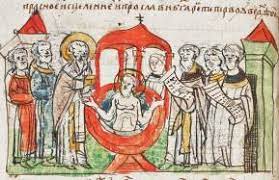
Sri Vishnu Puraana – Amsha 3, Chapter 10, Shloka 8: Tatah cha naama kurveeta pitaa iva dashame ahani | Then the child has to be given a name, this is called Naamakarana samskaara. Father only has to do naamakarana on the tenth day. The kuladevata's name can be taken. Or the name of their forefathers. Added with Sharma, Varma, etc. Samskaara is that which brings in a guna and dispels defects also. Dosha apanayana, guna aadhaana is the purpose of samskaara. Naamakarana is itself a samskaara. There are many things prescribed about how to give a name.
Sri Engal Aalwaan’s Commentary: Tata iti | Dashame ahani iti smruti ukta kaala upalakshanam | There are many smrutis prescribing different days for naamakarana. All of this is included here. Because they are also pramaana only. * Ahani ekaadashe naama * Naamadheyam dashamyaam cha kechit icchanti paarthiva | Dvaadashyaam atha vaa raatryaam maase poorne tathaa apare | iti cha smruteh | Some say that it is on the eleventh day. Or the tenth day. Or the twelfth day after birth. Or after one month. All are valid, and indicated by dashame ahani here. Deva poorvam * kula devataanaama sambaddham naama kuryaat * iti shaakhaa ukteh | Connected with the kula devataa, a name has to be given. Naraakhyam – pumvaachi, sharma varma aadi samyutam – sharma varma gupta daasa yuktam yat naama, yathaa – vishnusharmaa, indravarmaa, chandraguptah, haridaasa, iti | Deva shabdah rishi pitraadi sva poojya vaachee vaa | Naraakhya means that it is related to forefathers, another meaning is that it is for male or female, with proper names. For the four varnaas, they are told as Sharma, Varma, Gupta, Daasa, for Brahmins, Kshatriyaas, Vaishyaas and Shoodraas respectively. As in Vishnu Sharma, Indra Varma, Chandragupta, Haridaasa. Or their forefathers, or the rishis, whoever they hold respect towards, their name can be given.
Sri Vishnu Puraana – Amsha 3, Chapter 10, Shloka 9: Sharmeti braahmanasyoktam varmeti kshatrasamshrayam | Sharma is the name used for Brahmins. Varma is used for Kshatriyaas. Gupta and Daasa are holy for Vaishyaas and Shoodraas respectively.
Sri Vishnu Puraana – Amsha 3, Chapter 10, Shloka 10: Na arthaheenam na cha ashastam na apashabdayutam tathaa | The name should not be without any proper meaning. The name itself should not bring some kind of shame. Apashabdaas should not be used in the name. It should not be inauspicious name. Name itself should not create any jugupsaa. Even numbered letters should be in the name.
Sri Engal Aalwaan’s Commentary: Na arthaheenam iti | Ashastam ashleelam, vreedaa karam |
Sri Vishnu Puraana – Amsha 3, Chapter 10, Shloka 11: Na ati deergham na ati hrasvam na ati guru aksharaanvitam | It should not be too long or too short. It should not have many samyukta aksharaas, otherwise it will be difficult to pronounce. It should be easily pronounceable.
Sri Engal Aalwaan’s Commentary: Na iti | Na ati deergham dvyaksharam chaturaksharam vaa | Pranavaaksharam susandhi laghu uttaram | It should have proper sandhi, it should be easily readable, pronounceable.
Sri Vishnu Puraana – Amsha 3, Chapter 10, Shloka 12: Tato anantara samskaara samskruto guruveshmani | After all these naamakarana and other things, he will go to aachaarya's place, he has to go and stay there for vidyaa parigraha, for learning the Vedaas and Shaastraas.
Sri Engal Aalwaan’s Commentary: Tata iti | Anantaraah upa nishkramanaadi upanayanaantaah | After jaata karma, means up to upanayana – annapraashana, choodaa and upanayana, he has to go and stay in the Guru's house and learn the Vedaas. Starting from upanishkramana until upanayana, having got done, a brahmachaari has to go and stay with a guru and study all the vidyaas. Further karmaas are going to be told in the next set of shlokaas. We are studying of Amsha 3, Chapter 10, where the various karmaas that gruhasthaas do, are being told. In that, the jaatakarma and naandi mukha abhyudaya was told, and then the naamakarana, what kind of names to give, was told by Sri Paraasharar, as told by Ourva rishi to Sagara raaja. Now, he is going to talk about various other things also. After completing the education in the gurukula, what should he do, this is going to be told.
Sri Vishnu Puraana – Amsha 3, Chapter 10, Shloka 13: Gruheeta vidyo gurave dattvaa cha gurudakshinaam | After having completed the studies, he has to offer dakshinaa. Having given that, desiring to enter into a family, gruhasta aashrama, he should accept a bride.
Sri Engal Aalwaan’s Commentary: Gruheeta iti | Gurudakshinaam gurutva nimittaam dakshinaam | Upakurvaanah tu gruheeta vidyah samaavrutya gruhee syaat, vaikhaanaso yatih vaa syaat | Gurudakshinaa means – because a guru teaches the vidyaa, for that he has to offer some dakshinaa. After having completed the studies, he can enter into gruhasta aashrama, or he can remain as a vaikhaanasa, a yati.
Sri Vishnu Puraana – Amsha 3, Chapter 10, Shloka 14: Brahmacharyena vaa kaalam kuryaat sankalpa poorvakam | If he does sankalpa that he is going to stay as a Brahmachaari for life, this is called naishthika Brahmachaari. Of he can also serve the Guru or his children also.
Sri Engal Aalwaan’s Commentary: Brahmacharyena iti | Naishtikah san brahmacharya aashramena vaa yaavat aayuh kaalam nayet | As long as he is alive, he should stay in the Brahmachaari aashrama itself, this is called Naishtika Brahmachaari. Kim cha yaavat jeevam ayam eva mama aashrama iti poorvam sankalpitam chet tatra eva tishthet; na tu aashrama antaram gacchet | If he has done sankalpa that as long as I am alive, I am going to stay only in this aashrama, then he has to do like that. He should not change aashrama once he has done the sankalpa as above. Tatra api viraktou satyaam yatih syaat eva, na tu aashrama antaragaamee, * yat ahareva virajyet tat ahareva pravrajet; iti shruteh | If he gets virakti there itself, he can take sannyaasa aashrama, but not the other aashramaas. Shruti says that "At which point he gets virakti, at whatever moment he gets virakti, at that very moment, he has to leave everything and go and take sannyaasa" – this is told in the Upanishads.
Sri Vishnu Puraana – Amsha 3, Chapter 10, Shloka 15: Vaikhaanaso vaa api bhavet parivraat atha vecchayaa | He can go and stay in the forest, or he can become a sannyaasi. Whatever is the sankalpa, according to that, one has to do.
Sri Vishnu Puraana – Amsha 3, Chapter 10, Shloka 16: Varshaih ekagunaam bhaaryaam udvahet trigunah svayam | This is with respect to one who has desired to enter into gruhasta aashrama, and not remain as a naishthika Brahmachaari. He has to accept a girl as his wife. The lakshana of the bhaaryaa, wife are told here. One who does not have too much hair, or does not have any hair, or not too dark, or not too yellow.
Sri Engal Aalwaan’s Commentary: Varshaih iti | Eka gunam iti yaveeyaseetva upalakshanam | It is told by Yaajnyavalkyar that the wife has to be younger than him. One third of the age of the person is also told. This is also upalakshana for a younger wife. Wife should be younger than him. * Ashta varshaah bhavet kanyaa nava varshaa tu rohinee | Dasha varshaa bhavet gouree ata oordhvam rajasvalaa * iti kanyaayaah dasha varshaat param avivaahyatva smaranaat, * asapindaam yaveeyaseem * iti smruteh cha | One has to get a girl married before she reaches 10 years, is told in the Shaastraas. An eight year old girl is a kanyaa. Nine years is Rohini. Ten years is Gowri. After that, is not fit for marriage, is told. The wife should not be in the same gotra.
Sri Vishnu Puraana – Amsha 3, Chapter 10, Shloka 17: Nisargato adhikaangaam vaa nyoona angaam api na udvahet | Naturally very fat, or very thin, one should not marry. One who is not pure, or not born in a good vamsha, or one who has lot of diseases, are all told here.
Sri Vishnu Puraana – Amsha 3, Chapter 10, Shloka 18: Na dushtaam dushta vaakyaam vaa vyangineem pitru maatrutah | One who is bad, who speaks bad words, one who is subjected to nindaa, one whose parents have a skin disease, one who has a beard or mustache, not a male form.
Sri Engal Aalwaan’s Commentary: Na dushtaam iti | Vyangineem iti | Vyangineem nindyaam | Vyanga maataa pitrujaam, vyangaakhyatvak dosha maataa pitrujaam vaa | Shmashrureva vyanjanam pumstva chinham | If the parents have a skin disease, daughter of such parents should not be accepted as wife. Beard and mustache are signs of masculinity, and a girl should not have them.
Sri Vishnu Puraana – Amsha 3, Chapter 10, Shloka 19: Na ghargharasvaraam kshaamaam tathaa kaaka svaraam na cha | One who has a harsh voice, one whose voice is not good, one who has eyes always kind of closed, very small, very round.
Sri Vishnu Puraana – Amsha 3, Chapter 10, Shloka 20: Yasyaah cha romashe janghe gulphou yasyaah tathaa unnatou | One who has hairs in the legs, who has very thick ankles; when one laughs, if there are dimples on the cheeks, such a person should not be accepted in marriage. These are all told by Ourva Rishi, might have been there at that time.
Sri Vishnu Puraana – Amsha 3, Chapter 10, Shloka 21: Na ati rookshacchavim paandu karajaam arunekshanaam | One who has a very rough skin, or white nails, or red eyes, very thick hands, feet and palms, one should not accept such a girl as wife.
Sri Vishnu Puraana – Amsha 3, Chapter 10, Shloka 22: Na vaamanaam na ati deerghaam na udvahet samhata bhruvam | Not very short, not too tall, with eyebrows completely joined, teeth are very much far apart.
Sri Engal Aalwaan’s Commentary: Na vaamanaam iti | Karaalam danturam |
Sri Vishnu Puraana – Amsha 3, Chapter 10, Shloka 23: Panchameem maatru pakshaat cha pitru pakshaat cha saptameem | This is something people see even now. From the mother's side, five generations should be left. And from the father's side, seven generations. This is the gap which should be there if one is accepting a bride from mother's side or father's side. This is as per the shaastra.
Sri Engal Aalwaan’s Commentary: Panchameem iti | Sva maatuh prapitaamahah cha kootasthasya pamchamasya santaanaantarajaa taavat sankhya jana vyavahitaa kanyaa maatru pakshaat panchamee | Upto five generations on mother's side, and seven generations on father's side. Tathaa vara prapitaamahasya kootasthasya saptamasya santaana antara jaataa taavat sankhyajana vyavahitaa kanyaa pitru pakshaat saptamee | From the mother's side and father's side. Idam cha panchamee saptameebhyaam arvaang nishedha param | Tayoh na vivaaha vidhi param | Below the fifth and seventh generations, it is not allowed. They should not get married. * Panchamaat saptamaat oordhvam maatrutah pitrutah tathaa * iti smruteh | This is told in the shaastraas.
Sri Vishnu Puraana – Amsha 3, Chapter 10, Shloka 24: Braahmo daivah tathaa eva aarshah praajaapatyah tathaa asurah | There are eight kinds of marriage told here – Braahma vivaaha, Daiva vivaaha, Aarsha, Praajaapatya, Asura, Gaandharva, Raakshasa, Paishaacha.
Sri Engal Aalwaan’s Commentary: Braahma iti | Braahma aadi vivaahaanaam svaroopam smrutishu drashtavyam | These are all told in Manu Smruti.
Sri Vishnu Puraana – Amsha 3, Chapter 10, Shloka 25: Eteshaam yasya yo dharmo varnasya ukto maharshibhih | Whatever is the dharma for one, for their varna, is told by Maharshis – accordingly one has to accept a wife. Others should not be accepted.
Sri Vishnu Puraana – Amsha 3, Chapter 10, Shloka 26: Sa dharmachaarineem praapya gaarhastyam sahitah tayaa | Having accepted a wife, who also follows the same dharma that the husband follows, if one marries like this, he will get a lot of punyaas, and a lot of phalaas.
This concludes Chapter 10. || Iti Sri Vishnu Puraane Truteeye Amshe Dashamo Adhyaayah || || Iti Sri Vishnu Chitteeye Vishnu Puraana Vyaakhyaane Truteeye Amshe Dashamo Adhyaayah ||
***
|| Atha Ekaadasho Adhyaayah ||
|
||
|
|
Последнее изменение этой страницы: 2024-07-06; просмотров: 48; Нарушение авторского права страницы; Мы поможем в написании вашей работы! infopedia.su Все материалы представленные на сайте исключительно с целью ознакомления читателями и не преследуют коммерческих целей или нарушение авторских прав. Обратная связь - 216.73.216.153 (0.006 с.) |