Discuss possible answers with a partner. Remember to support your ideas.
Содержание книги
- A.K. Izmukhanova, N.A. Aubakir
- Read the descriptions below of a normal day in the lives of two children.
- Write short questions ending in a preposition in response to these statements.
- Choose an answer from a,b,c, d, e.
- Public Health System in Kazakhstan
- Have you done something different from what was advised in a particular situation and found out it was wrong after reading the text? What happened?
- Discuss possible answers with a partner. Remember to support your ideas.
- Present Perfect Simple and Present Perfect Continuous
- Fill in the blanks with Present Perfect or Perfect Continuous Tenses
- What can acupuncture be used to treat?
- Choose the correct answers to the questions
- Discuss or debate the questions below. Remember to support your answers.
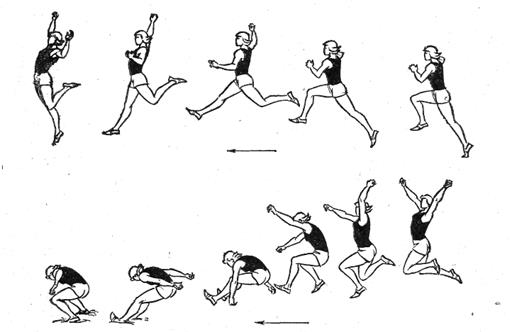
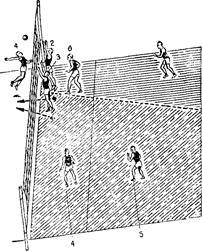
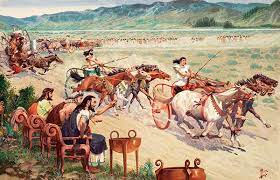
- There are many types of sports. Can you name some sports in these categories? Use the words from chart below.
- Kazakhstan's foreign policy will be based on the principles of balance, consistency and pragmatism - E. Idrissov
- Listen to the audio one more time and retell the key information to your partner.
- Read the following questions and circle the best answer.
- Look at the photos. Identify the crime, which they represent. What could be the punishment for it?What should you do to protect yourself from such crimes?
- Richard Mann has been committing crimes since he was a boy.
- Complete the pairs of sentences. Use the Present Perfect in one sentence and the Past Simple in the other.
- Read the text. Predict which words are omitted.
- Look at the case studies below and answer the questions posed with respect to the key criminal elements covered above (e.g. mens rea, actus reus, party to an offence).
- Look at the list of youth crimes and rate each, which is the most serious one?
- Listen to an audio on Dr Christine Goodall, Director of the charity Medics Against Violence, talking about violence as a cause of crime in Scotland.
- Choose consecutive interpreters (to interpret the speakers into Kazakh/Russian)
- Make up about 5-10 questions according to the text and discuss the questions in pairs.
- Written example of narrative tenses in use
- Listen again and make a list of about 5-10 questions
- Answer the questions. Work in groups of 4 or as a class.
- Read the following text and entitle it.
- Discuss in pairs following questions
- Unit 4 culture and the arts in human life
- Play a game “If you had the chance”.
- What do you think of contemporary art now? Have you changed your opinion after reading the texts?
- Must have - Might have - Should have - Can't have
- Zhanar Dungalova Is the New Golden Voice of the Turkic World
- Look at the pictures. What do they show?
- Do you like opera? When was the last time you saw one? Did you enjoy it?
- Work with your partner. Cover the second part.
- English in the press British or American? Find out whether these extracts deal with a British or an American issue.
- Fill in the blanks below with the correct form of the verb in brackets.
- Now divide into groups and find benefits and dangers of television.
- Read the article “Email - a good thing or a bad thing?” and speak about the positive and negative sides of emails or debate
- Read the questions and choose the right answer.
- Modern means of communication have introduced relevant changes in our lives; some believe benefits outweigh disadvantages, others the opposite. Discuss your view and state your opinion.
- Look at the following pictures and discuss with a partner the news items in the radio clip. Can you put the pictures in order that they were mentioned?
- Select one of the following vocabulary acquisition activities.
- Complete the passage below by filling the gaps with the correct forms of thewords in a box below.
- Read the following sample letter
- Uncountable and plural nouns
- Make a list of 5-10 questions and discuss it in pairs.
· What is the average age of death in your country?
· Has it increased or decreased in recent years?
· How does it compare with other countries?
 
1. The posters below are part of a university campaign that aims at informing people about H1N1 flu symptoms and prevention. Read them and answer the questions:

a) Did the posters clearly inform about H1N1 flu symptoms and prevention? Why?
_____________________________________________________________
_____________________________________________________________
b) Was the amount of text used and the organization in topics useful to make you understand the information in the posters? Why?
_____________________________________________________________
_____________________________________________________________
c) Would the posters have the same impact if they were printed in black and white and had no images? Why/why not?
_____________________________________________________________
_____________________________________________________________
d) What’s the importance of having an attractive and impacting title in posters?
_____________________________________________________________
e) Would it make a difference if you didn’t know the institution responsible for the poster? Would this fact impact the credibility of the information given?
_____________________________________________________________
_____________________________________________________________
2. In pairs or small groups create a digital poster (a glog) in www.glogster.com about Dengue Fever symptoms and prevention. Use the checklist below to help you creating an effective poster with attractive visual aids and useful information.
| GLOGSTER
poster yourself EDU
|
Poster checklist
| 1)
| Does the title attract attention?
| (
| ) yes
| (
| ) no
| |
|
|
|
|
|
| | 2)
| Did you use colors and images?
| (
| ) yes
| (
| ) no
| |
|
|
|
|
|
| | 3)
| Is the information useful, brief and objective?
| (
| ) yes
| (
| ) no
| |
|
|
|
|
|
| | 4)
| Is the institution responsible for the poster informed?
| (
| ) yes
| (
| ) no
| |
|
|
|
|
|
| | 5)
| Did you revise spelling, punctuation and capitalization?
| (
| ) yes
| (
| ) no
| |
|
|
|
|
|
|
3. Below you can find useful information taken from the British Red Cross website about accidents in roads. Put the sentences in the correct order:
What to do in a road accident:
· turn off park and the safely engine
______________________________
· the move injured person don’t
______________________________
· stop you can the if blood
______________________________
· resuscitation start cardio-pulmonary
·
· the call services emergency

4. Read the article about Diabetes from the health section of the online New York Times newspaper:
Diabetes is usually a lifelong (chronic) disease in which there are high levels of sugar in the blood.
| Causes
People with diabetes have high blood sugar because their body cannot move sugar into fat, liver, and muscle cells to be stored for energy. This is because either:
· Their pancreas does not make enough insulin;
· Their cells do not respond to insulin normally;
Both of the above.
| Symptoms
High blood sugar levels can cause several symptoms, including:
1. Blurry vision
2. Excess thirst
3. Fatigue
4. Hunger
5. Urinating often
6. Weight loss
Because type 2 diabetes develops slowly, some people with high blood sugar have no symptoms.
|
| Types
Type 1 diabetes can occur at any age, but it is most often diagnosed in children, teens, or young adults. In this disease, the body makes little or no insulin. Daily injections of insulin are needed. The exact cause is unknown.
Type 2 diabetes most often occurs in adulthood. Many people with type 2 diabetes do not know they have it.
Gestational diabetes is high blood sugar that develops at any time during pregnancy in a woman who does not have diabetes.
| Prevention
Keeping an ideal body weight and an active lifestyle may prevent type 2 diabetes.
There is no way yet to prevent type 1 diabetes.
| Treatment
Treating both type 1 diabetes and type 2 diabetes involves medicines, diet, and exercise to control blood sugar levels and prevent symptoms and problems.
Getting better control over your blood sugar, cholesterol, and blood pressure levels helps reduce the risk of kidney disease, eye disease, nervous system disease, heart attack, and stroke.
|
| a) Write true (T) or false (F) according to the information in the text:
|
|
| | I) Oral medication is enough to treat some cases of Diabetes 1.
| (
| )
| | II) Doctors know why people with Diabetes 1 produce little or no insulin.
| (
| )
| | III) Diabetes 2 often occurs in children, teens and young adults.
| (
| )
| | IV) Gestational diabetes is related to a previous diagnosis and family history.
| (
| )
| | V) Keeping a healthy lifestyle helps preventing Diabetes 1.
| (
| )
| | b) Answer the questions:
I) What is the objective of the text?
II) What are the two reasons why people might have high levels of sugar in their blood?
III) How can Diabetes be controlled?
IV) Looking for a doctor shortly after experiencing some of the symptoms listed in the text is always helpful to guarantee an early diagnosis of Diabetes 2? Explain.
V) Is it possible to prevent Diabetes 1 and 2? If so, what should be done?
|
|
| 5. Watch the video and complete the eight steps on how to prevent food poisoning:
| Food poisoning: an illness affecting yourstomach, caused by eating food that contains harmful bacteria.
Did you know?Every year, food-bornediseases cause 76 million illnesses, 325,000 hospitalizations and 5,000 deaths in the United States.
| 
Step 1: ___________ dates on food products before purchasing them and ___________ themagain before cooking.
Step 2: ___________ meat, fruit and vegetables for storage and ___________ any food thatlooks or smells questionable.
Step 3: ___________ your hands with anti-bacterial soap and hot water frequently.
Step 4: ___________ products in a solution of 1 part vinegar or lemon juice and 3 partswater. ___________ ___________soaps, detergents or special cleaners.
Step 5: ___________ ___________ the same cutting boards on meat and vegetables unlessyou wash it between uses
Step 6: ___________ a meat thermometer to ensure that meats are cooked and wash the probeeach time you check the temperature.
Step 7: ___________ food on clean plates
Step 8: Refrigerate or ___________ leftovers within 2 hours of cooking
|

 Археология
 Биология
 Генетика
 География
 Информатика
 История
 Логика
 Маркетинг
 Математика
 Менеджмент
 Механика
 Педагогика
 Религия
 Социология
 Технологии
 Физика
 Философия
 Финансы
 Химия
Химия Экология