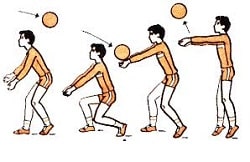
Заглавная страница Избранные статьи Случайная статья Познавательные статьи Новые добавления Обратная связь FAQ Написать работу КАТЕГОРИИ:  Археология Археология Биология Биология Генетика Генетика География География Информатика Информатика История История Логика Логика Маркетинг Маркетинг Математика Математика Менеджмент Менеджмент Механика Механика Педагогика Педагогика Религия Религия Социология Социология Технологии Технологии Физика Физика Философия Философия Финансы Финансы Химия Химия Экология ЭкологияТОП 10 на сайте Приготовление дезинфицирующих растворов различной концентрацииТехника нижней прямой подачи мяча. Франко-прусская война (причины и последствия) Организация работы процедурного кабинета Смысловое и механическое запоминание, их место и роль в усвоении знаний Коммуникативные барьеры и пути их преодоления Обработка изделий медицинского назначения многократного применения Образцы текста публицистического стиля Четыре типа изменения баланса Задачи с ответами для Всероссийской олимпиады по праву 
Мы поможем в написании ваших работ! ЗНАЕТЕ ЛИ ВЫ?
Влияние общества на человека
Приготовление дезинфицирующих растворов различной концентрации Практические работы по географии для 6 класса Организация работы процедурного кабинета Изменения в неживой природе осенью Уборка процедурного кабинета Сольфеджио. Все правила по сольфеджио Балочные системы. Определение реакций опор и моментов защемления |
ugasya tadanādaraśravaṇāttadādravaṇātsūcyate hi ..1.3.34..Поиск на нашем сайте to Vaidic meditation
In the previous part, it has been mentioned that men as well as the Devas are qualified to meditate on Brahman, because they have the capability and other requisites for such meditation. Now this cannot take place without study of the Vedanta texts, for Brahman is said in the scriptures «the Aupanishada Purusha», the Spirit revealed by the Upanishads. Consequently the question arises, are all men indiscriminately qualified to the study of (he Upanishads? To this, the answer ultimately given is that baby-souls, which are just coming out of animality into humanity, are not, entitled to study Upanishads or militate on Brahman at once. In the Chhandogya Upanishad (here occurs the story of a king tailed Janashruti. He was a hospitable prince and profuse in his generosity, possessing many good qualities. The mighty sages called Devarishis were satisfied with his high-mindedness and, assuming the form of flamingoes, they How across his palace, when the prince was lying in open air, on the roof of his terrace, in a sultry summer night. One of these flamingoes, who was in front, was addressed by another flamingo, who was in the rear, thus: «Oh short-sighted one, seest thou not the auric light of this noble prince, extending from his body, high up into the air? Do not heedlessly cross his aura, lest it may destroy thee». Hearing this the other flamingo answered: «Is his aura stronger than that of Raikva of the ear? Raikva is one who is always on his car, making pilgrimages from one sacred place to another, and thus sanctifying with his aura, all those shrines. He possesses Brahmanic aura, far more potent than the aura of this mere petty prince». The object of the compassionate Rishis was to break the shell of self-complacency into which this prince had unconsciously fallen, so that he might exert to know the Brahma Vidya, and might not rest satisfied with the mere performance of charity, though on a very large and profuse scale. The king hearing this speech of the flamingoes, found out his inferiority to Raikva, and was distressed in his heart, and passed his night in a state of restless grief. When it was dawn and the Royal bards were discoursing soft music praising the king and his many royal qualities, the prince, rising from his bed, at once sent for his chamberlain, and told him to find out without delay, where was this Raikva, who was always on the move in his car. The chamberlain, after much search, found him in a retired spot, sitting under his car and scratching his itches. He at once returned to the king and informed him of his discovery. The king taking cows, gold and chariots, went to Raikva, and presenting them to him, said, «Teach me, Venerable Sir, the God that you worship». Raikva replied: «Away with thy necklace and thy chariots, O Shudra! It these cows remain with thee». Thus discarded, and called a Shudra, the king went back and brought more wealth, cows, chariots, and oven his daughter, as a present for the sage. But Raikva again addressed him with the opprobrious title of Shudra, saying «O Shudra, hopest thou to gain this knowledge through these means?» However, he relented ultimately and taught the king the Samvarga Vidya» or the meditation on the laws of dissolution. Vishaya: Thus Raikva twice addressed the king as Shudra in the passages which are quoted below in the original: 1. Therefore Janashruti Pautrayana having taken six hundred cows, a necklace, and a carriage drawn by a pair of mules, went to Raikva and addressed him thus: 2. «O Raikva! these six hundred cows, this pearl necklace, this carriage with mules are presents for you. Teach me, O master, that Deity whom you worship». 3. To him said Raikva: «Fie! the necklace and the carriage, O Shudra, be thine, even together with the cows». Then Janashruti, taking again a thousand cows, a pearl necklace, a carriage yoked with a pair of mules, and his daughter, went back to Raikva. 4. He said to him: «Raikva, these one thousand cows, this pearl necklace, this carriage drawn by a pair of mules, this girl for thy wife, and this village in which thou dwellest are thy fee. Teach me, O master’.’ 5. Then Raikva, after looking for a while at the face of the girl, said, «Take away these gifts, O Shudra, thinkest thou to speak with me through this means?» Then Raikva relented and told him. These are the Raikvaparna villages in the land of the Mahavrishas, where Raikva dwelt in order to teach him. Note: This Adhikarana appears to be an interpolation. The question whether a Shudra is entitled to the study of the Vedas or not has been answered in favour of the Shudras by no less an authority than «Svami Dayananda Sarasvati, the founder of the Arya Samaj. He quotes the ancient scriptures to show that in the Vedic age, there was no such restriction. The condition of the Shudras became worse in the Vaidic period only. The degradation of the Shudras was preceded by the decline of the Brahmanas, who, when they lost their inherent greatness, began to rely, more and more, on their privilege. The honor which was spontaneously given to them because of their knowledge and wisdom and purity of life, was now extorted by them merely on the strength of their birth and race. Doubt: Here arises this doubt. is a Shudra qualified to study the Vaidic Science or not, and perform Vaidic meditations? Purvapaksha: The Purvapakshin says that a Shudra is qualified to study the Vedas, for the following reasons: firstly, because every man in general, is stated to be so qualified; secondly, because the Shudra possesses the capability of so studying; thirdly, because the express text of the Shruti uses the word Shudra, which is an indication that Shudra is qualified; fourthly, in the Puranas and the rest, we find persons like Vidura and others described as possessing a knowledge of Brahman. Therefore, for all these reasons, a Shudra is qualified for Vaidic study and Vaidic meditation. Siddhanta: This objection, the author answers by the following Sutra: SUTRA I. 3. 34.
शुगस्य तदनादरश्रवणात्तदाद्रवणात्सूच्यते हि॥१.३.३४॥
… Shuk, sorrow, grief. … Asya, his, «namely, of Janashruti. .. Tat, that, namely, that grief. … Anadara, disrespect, the disrespectful speech of the flamingo, who taunted him for want of Brahman-knowledge. Shravanat, because of hearing. … Tada, then. … Adravanat, because of resorting to, or going to him, i.e., to Raikva. Suchyate, is intimated, is referred to. … Hi, because.
|
||
|
|
Последнее изменение этой страницы: 2024-07-06; просмотров: 53; Нарушение авторского права страницы; Мы поможем в написании вашей работы! infopedia.su Все материалы представленные на сайте исключительно с целью ознакомления читателями и не преследуют коммерческих целей или нарушение авторских прав. Обратная связь - 216.73.216.150 (0.005 с.) |