Заглавная страница Избранные статьи Случайная статья Познавательные статьи Новые добавления Обратная связь FAQ Написать работу КАТЕГОРИИ:  Археология Археология Биология Биология Генетика Генетика География География Информатика Информатика История История Логика Логика Маркетинг Маркетинг Математика Математика Менеджмент Менеджмент Механика Механика Педагогика Педагогика Религия Религия Социология Социология Технологии Технологии Физика Физика Философия Философия Финансы Финансы Химия Химия Экология ЭкологияТОП 10 на сайте Приготовление дезинфицирующих растворов различной концентрацииТехника нижней прямой подачи мяча. Франко-прусская война (причины и последствия) Организация работы процедурного кабинета Смысловое и механическое запоминание, их место и роль в усвоении знаний Коммуникативные барьеры и пути их преодоления Обработка изделий медицинского назначения многократного применения Образцы текста публицистического стиля Четыре типа изменения баланса Задачи с ответами для Всероссийской олимпиады по праву 
Мы поможем в написании ваших работ! ЗНАЕТЕ ЛИ ВЫ?
Влияние общества на человека
Приготовление дезинфицирующих растворов различной концентрации Практические работы по географии для 6 класса Организация работы процедурного кабинета Изменения в неживой природе осенью Уборка процедурного кабинета Сольфеджио. Все правила по сольфеджио Балочные системы. Определение реакций опор и моментов защемления |
Noise levels in the workplacesСодержание книги
Поиск на нашем сайте Solution. 1. According to GOST 12.1.003-2014 [16] determine permissible levels of noise in the workplace laboratories L63 = 91 dB; L125 = 83 dB B; L250 = 77 dB; L500 = 73 dB; L1000 =70 dB; L2000 =68 dB; L4000 = 66 dB and L8000 = 64 dB. We conclude that at certain frequencies, the sound pressure level is exceeded by 1-4 dB, so it is necessary to use sound-absorbing facings in the room. 2. Find the room volume:
3. Then we calculate the area of the enclosing surfaces of the room:
4. We determine the constant of an acoustically untreated room for an octave band with an average geometric frequency of 63 Hz by formula (2.2): B63 = B1000·μ = 0,65 ·V/10 = 0,65 · 216/10 = 14,04 м2.
Similarly, we get for other octave bands: B 125 = 13,39 m2; B 2000 = 32,4 m2; B250= 13,82 m2; В4000 = 51,84 m2 ; B 500=16,2 m2; B 8000 = 90,72 m2. B 1000 = 21,6 m2;
5. The equivalent sound absorption area for an octave band with an average 63 Hz frequency geometric formula (4.3):
Similarly, we get for other octave bands: A125= 12,7 m2; A2000 = 28,7 m2; A250= 13,1 m2; A4000= 43,0 m2; A500= 15,2 m2; A8000 = 66,7 m2. A1000=19,9 m2;
6. The distance from the noise sources at which the sound pressure level of the reflected sound is equal to the sound pressure level of the direct sound emitted by these sources is calculated by the formula (4.4):
where n = 4 is the number of identical noise sources in the room. 7. The average coefficient of sound absorption in the room before its acoustic processing for an octave band with an average geometric frequency of 63 Hz is calculated by the formula (4.8): α63 = В63/(В63 + S) = 14,04/(14,04 + 252) = 0,053. Similarly, after performing calculations for the remaining octave bands, we obtain: α125 = 0,05; α2000 = 0,114; α250 = 0,052; α4000= 0,171, α500 = 0,06; α8000= 0,265. α1000 = 0,079;
8. The equivalent area of sound absorption by surfaces not occupied by sound-absorbing lining for an octave band with an average geometric frequency of 63 Hz is calculated by the formula (4.7): А163 = α63 (S – So) = 0,053(252 – 180) = 3,8 m2, where S0= 180 m2 – area surfaces coated with full lining the walls and ceiling. For the remaining octave bands the order of calculation is similar: А1 125= 3,6 m2; А1 2000 = 8,2 m2; А1 250 = 3,7 m2; А1 4000 = 12,3 m2; А1 500 = 4 3 m2; А1 8000= 19,1 m2. А1 1000= 5,7 m2;
9. The total additional area of sound absorption from the design of sound-absorbing lining for an octave band with an average geometric frequency of 63 Hz, formula (4.10): ΔА63= α0 63 ·S0 = 0,21·180 = 37,8 m2, where α0 63 = 0,21 – coefficient of sound absorption of perforated panels of 3 cm thick with asbestos wool inside of 6 mm thick (the values of α0 for the remaining octave bands are shown in Table 4.4). Similarly we get for the remaining octave bands: ΔА125 = 93,6 m2; ΔА2000= 73,8 m2; ΔА250 =97,2 m2; ΔА4000= 59,4 m2; ΔА500 = 97,2 m2; ΔА8000= 57,6 m2. ΔА1000= 90 m2;
10. The average sound absorption coefficient of an acoustically processed room in an octave band with an average geometric frequency of 63 Hz, formula (4.9): α1 63 =(Α1 63 +ΔA63)/S= (3,8 + 37,8)/252 = 0,165. Similarly calculate the α1 for the remaining octave bands: α1 125 = 0,386; α1 2000= 0,325; α250= 0,4; α1 4000 = 0,285; α1 500 = 0,403; α1 8000=0,304. α1 1000= 0,38;
11. The constant of the premise after its facing with sound-absorbing materials for an octave band with an average geometric frequency of В'63 = (А1 63 + ΔА63) / (1 - α1 63) = (3,8 + 37,8) / (1 - 0,165) = 49,8 m2. Similarly we calculate В' for the remaining octave bands: В'125= 158,3 m2; В'2000= 121,5m2; В'250 = 168,2 m2; В'4000= 100,3m2; В'500=170m2; В'8000 = 110,2m2. В'1000= 154,4 m2;
12. The maximum reduction in the sound pressure level in the octave band with the average geometric frequency of 63 Hz with the use of sound-absorbing coatings at the calculated point located in the zone of reflected sound (at a distance from noise sources exceeding 0.95 m), formula (4.5): ΔL63 = 10 lg(В'63/ В63) = 10 lg(49,8/14,04) = 5,5 dB. Similarly we get for the rest remaining octave bands: ΔL125= 10,7 dB; ΔL2000 = 5,7 dB; ΔL250= 10,9 dB; ΔL4000= 2,8 dB; ΔL500= 10,2 dB; ΔL8000 = 0,8 dB. ΔL1000= 8,5 dB;
13. We shall determine the sound pressure levels for octave bands achieved as a result of using the laboratory cladding with sound-absorbing material, and the results will be listed in table 4.6. Table 4.6 Noise level Sound pressure level, dB, at frequencies Achieved 68,5 67,3 70,1 64,8 63,5 63,3 64,2 62,2 Pemissible
14. Conclusion: from table 4.6 it can be seen that, as a result of using perforated panels 3 cm thick with asbestos wool of 6 mm thick inside as a facing surface, complete reduction of the walls and ceiling at all octave frequencies resulted in a decrease in the noise level, which indicates the effectiveness of the sound-absorbing cladding of this type.
|
||
|
|
Последнее изменение этой страницы: 2024-06-27; просмотров: 60; Нарушение авторского права страницы; Мы поможем в написании вашей работы! infopedia.su Все материалы представленные на сайте исключительно с целью ознакомления читателями и не преследуют коммерческих целей или нарушение авторских прав. Обратная связь - 216.73.216.60 (0.005 с.) |

 m3.
m3. m2.
m2.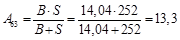 m2
m2 m,
m,