Заглавная страница Избранные статьи Случайная статья Познавательные статьи Новые добавления Обратная связь FAQ Написать работу КАТЕГОРИИ:  Археология Археология Биология Биология Генетика Генетика География География Информатика Информатика История История Логика Логика Маркетинг Маркетинг Математика Математика Менеджмент Менеджмент Механика Механика Педагогика Педагогика Религия Религия Социология Социология Технологии Технологии Физика Физика Философия Философия Финансы Финансы Химия Химия Экология ЭкологияТОП 10 на сайте Приготовление дезинфицирующих растворов различной концентрацииТехника нижней прямой подачи мяча. Франко-прусская война (причины и последствия) Организация работы процедурного кабинета Смысловое и механическое запоминание, их место и роль в усвоении знаний Коммуникативные барьеры и пути их преодоления Обработка изделий медицинского назначения многократного применения Образцы текста публицистического стиля Четыре типа изменения баланса Задачи с ответами для Всероссийской олимпиады по праву 
Мы поможем в написании ваших работ! ЗНАЕТЕ ЛИ ВЫ?
Влияние общества на человека
Приготовление дезинфицирующих растворов различной концентрации Практические работы по географии для 6 класса Организация работы процедурного кабинета Изменения в неживой природе осенью Уборка процедурного кабинета Сольфеджио. Все правила по сольфеджио Балочные системы. Определение реакций опор и моментов защемления |
Assessment of the consequences of the explosion of gas-air and fuel-air mixtures in detonation modeСодержание книги
Поиск на нашем сайте Assessment of the consequences of the explosion of gas-air and fuel-air mixtures in detonation mode The method of calculation As a result of the explosion of fuel assemblies or hot water, zones are formed: a blasting action, a fireball, a shock wave, and thermal damage. Each of the zones is characterized by a radius, values of excess pressure and thermal radiation. 1. Zone of blasting (shattering) action. The radius of the zone of blasting action is determined by the formula:
where M is the mass of the FAM in the tank, kg; α – factor depending on the storage conditions of the substance (α = 0.5 – for single storage, α = 0.9 for group storage). Overpressure in the zone is assumed: ΔPf1=1750 kPa. 2. Zone of the fireball. Radius of the fireball zone: Rfb=1,7·R1 (6.2) 3. Zone of action of the shock wave. This zone is subdivided into 4 subzones by the value of the overpressure at the boundary of zone ΔPf: – Subzone of maximal impact (full damage) (ΔPf=50 kPa); – Subzone of strong impact (intense damage) (ΔPf=30 kPa); – Subzone of midlevel impact (medium damage) (ΔPf=20 kPa); – Subzone of low level impact (little damage) (ΔPf=30 kPa); Little damage is damage or destruction of roofs and window and door openings. Damage is about 10–15% of the number of buildings (Table 6.1). Medium damage is the destruction of roofs, windows, partitions, attic floors, upper floors. The damage is 10–15%. Intense damage is the destruction of load-bearing structures and ceilings. The damage is 50%. Repair is not practical. Full damage (complete destruction) is the collapse of buildings. Overpressure at the explosion zone of the explosion products (at the boundary of the fireball), kPa:
Radius of the boundary of each subzone (full, intense, medium and little damage) can be determined by the formula:
where ΔPf is overpressure at the boundary of zone (50, 30, 20, 10 kPa respectively). Тable 6.1
|
||
|
|
Последнее изменение этой страницы: 2024-06-27; просмотров: 108; Нарушение авторского права страницы; Мы поможем в написании вашей работы! infopedia.su Все материалы представленные на сайте исключительно с целью ознакомления читателями и не преследуют коммерческих целей или нарушение авторских прав. Обратная связь - 216.73.216.150 (0.006 с.) |

 (6.1)
(6.1)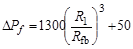 . (6.3)
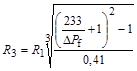 (6.4)
(6.4)