Заглавная страница Избранные статьи Случайная статья Познавательные статьи Новые добавления Обратная связь FAQ Написать работу КАТЕГОРИИ:  Археология Археология Биология Биология Генетика Генетика География География Информатика Информатика История История Логика Логика Маркетинг Маркетинг Математика Математика Менеджмент Менеджмент Механика Механика Педагогика Педагогика Религия Религия Социология Социология Технологии Технологии Физика Физика Философия Философия Финансы Финансы Химия Химия Экология ЭкологияТОП 10 на сайте Приготовление дезинфицирующих растворов различной концентрацииТехника нижней прямой подачи мяча. Франко-прусская война (причины и последствия) Организация работы процедурного кабинета Смысловое и механическое запоминание, их место и роль в усвоении знаний Коммуникативные барьеры и пути их преодоления Обработка изделий медицинского назначения многократного применения Образцы текста публицистического стиля Четыре типа изменения баланса Задачи с ответами для Всероссийской олимпиады по праву 
Мы поможем в написании ваших работ! ЗНАЕТЕ ЛИ ВЫ?
Влияние общества на человека
Приготовление дезинфицирующих растворов различной концентрации Практические работы по географии для 6 класса Организация работы процедурного кабинета Изменения в неживой природе осенью Уборка процедурного кабинета Сольфеджио. Все правила по сольфеджио Балочные системы. Определение реакций опор и моментов защемления |
Levels of Higher Education in RussiaСодержание книги
Похожие статьи вашей тематики
Поиск на нашем сайте https://studyinrussia.ru/en/study-in-russia/info/levels-of-education/
______________________________________________________
1. What do you know about Russian educational system? 2. What degree courses can students take at Russian universities? 3. How long does each degree course last? 4. What jobs do you think require the highest level of education? 5. What degree course are you taking? Do you want to go on your study after completing your course?
Russia’s present-day education system is based upon the Bologna principles and includes such levels of education as bachelor’s degree, specialist degree, master’s degree, postgraduate, clinical internship etc.
This is a complete higher education course. Individuals who have completed education equivalent to Russian general secondary or vocational secondary education can enroll in a Bachelor's Degree course. The course lasts 4 years and gives general fundamental training.
Unlike Bachelor's Degrees, Specialist Degrees are more focused on practical work in industry according to the selected discipline. These programs are offered to individuals who have education equivalent to Russian general secondary or vocational secondary education. The course lasts for a minimum of 5 years. Based on the examination results and thesis defense, a Specialist Degree certificate specifying the qualification (e.g., "Astronomer," "Teacher," "Information Security Specialist," etc.) may be issued. Graduates of a Specialist Degree may work in industry or further their studies on a Master's or other postgraduate course. Master's Degree This allows in-depth specialisation in the student’s chosen field. Bachelor’s and Specialist Degree holders can enroll in Master's Degree courses. The course lasts at least two years and involves training students for research work. Students defend a thesis which, if successful, leads to a Master's Degree certificate and the qualification of Master. Graduates of Master’s Degrees may work in industry or further their studies on a postgraduate course.
Level 3. Highest Professional Training
Second Higher Education. Russian legislation grants Russians just one free higher education (of levels 1, 2, or 3), while subsequent study must always be paid for. Foreign citizens who have graduated from a university outside the Russian Federation may enroll in a second higher education course both on a commercial and state-funded basis (subject to successful completion of the selection process). This can be done as part of a Bachelor's (up to 4 years), Specialist (up to 6 years), or Master's (at least 2 years) Degree. The selection process is based on entry examinations. Upon graduation, a certificate is awarded to confirm the qualification.
Internship – n., any official or formal program to provide practical experience for beginners in an occupation or profession. Enroll – v., officially register as a member of an institution or a student on a course. Thesis – n., a dissertation embodying results of original research and especially substantiating a specific view. Vocational – adj., relating to an occupation or employment. Holder – n., a person that holds something. Further – v., help the progress or development of (something); promote. Hands-on – adj., involving or offering active participation rather than theory. Fellow – n., a person in the same position, involved in the same activity, or otherwise associated with another. Confirm – v., to approve or to establish the truth or make stronger. Legislation – n., laws, considered collectively.
1. The lowest level of higher education is Bachelor’s Degree. 2. Only those who complete vocational training can enroll in Bachelor’s Degree course. 3. Specialist Degree courses are more concentrated on theory rather than on practice. 4. Specialist Degree courses last at least 6 years. 5. Bachelor’s and Specialist Degree holders can enroll in Postgraduate course. 6. Master’s Degree courses provide students with deeper knowledge in chosen profession. 7. A Candidate of Sciences Degree is awarded depending on the results of examination. 8. Postgraduate students choose the realm of research for their dissertation. 9. Foreign students may enroll in a second higher education on a commercial basis only. 10. Russian citizens may get higher education both on a commercial and state-funded basis.
1. What principles does modern Russian education system follow? 2. Who may enroll in Bachelor’s Degree course? 3. What training does Bachelor’s Degree course provide? 4. What is the difference between Bachelor’s Degree course and Specialist Degree course? 5. What is necessary to be awarded Specialist Degree? 6. How long does the Master’s Degree course last? 7. What qualification is a graduate of Postgraduate course awarded? 8. What does the Postgraduate course involve? 9. When is the Doctorate Degree awarded? 10. Are foreign students allowed to enroll in Russian universities on a state-funded basis?
1. system Russian education Bologna based the upon principles is. 2. gives The fundamental course training general. 3. the The certificate right according to grants work to profession. 4. 5 The a minimum course for of lasts years. 5. Specialist in Degree enroll Master's holders Degree can courses. 6. research dissertation students a field for select their Postgraduate. 7. Russian Russians free legislation higher grants one education. 8. end students thesis At the of their Degree, defend their. 9. industry may of a Specialist work in or further their Degree studies Graduates. 10. selection is based The on process examinations entry.
Russians have always shown a great 1) __________. The right for education is stated in the Constitution of the Russian Federation. It is ensured by 2) _________, vocational schools, and higher education institutions. It is also ensured by various evening courses and the system of 3) __________. Mostly due to the demands of 4) __________, the system of education in Russia has considerably changed over the past five years. Universities have 5) __________ a system similar to that of Britain and the USA: 4 years for a Bachelor's degree and 2 years for a Master's degree. These changes are still in progress; some universities 6) __________; others still work according to the prior 5-year system. After completing higher education, one can 7) __________ (aspirantura in Russian), which takes three years. After 8) __________, 'Candidate of Science' (or Kandidat nauk) degree is awarded. This is considered equivalent to the Ph.D. degree according to the American system. There is one more scientific degree in Russia higher than 'Candidate of Science'. It is the 9)__________ (or Doktor nauk) degree. This 10) __________, known as doctorantura in Russian, takes three more years. 'Doctor of Science' degree is awarded after defending the doctoral thesis.
Read the quotation by Nelson Mandela. In what extent do you agree with him? Give a reason.
Text B.
|
|||||||||||||||||||||||||||||||||||||||||||||||||||||||||||||
|
|
Последнее изменение этой страницы: 2020-12-17; просмотров: 1181; Нарушение авторского права страницы; Мы поможем в написании вашей работы! infopedia.su Все материалы представленные на сайте исключительно с целью ознакомления читателями и не преследуют коммерческих целей или нарушение авторских прав. Обратная связь - 216.73.216.153 (0.007 с.) |

 Before reading:
 I. Brainstorm. Answer the following questions:
 Read the text and check if you were right.
 Level 1. Bachelor's Degree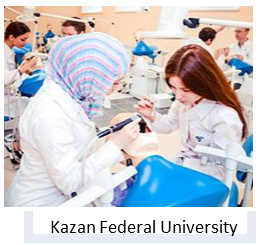
 A POSTGRADUATE COURSE is a form of training for academics. Graduates of a Master's or Specialist Degree can enroll in a postgraduate course. The course includes study, teaching, hands-on experience, and research. Postgraduate students select a research field and subject of research for their dissertation. Full-time study lasts at least 3 years, while part-time study lasts at least 4 years. A graduate is awarded a postgraduate certificate with the corresponding qualification (“Research Fellow,” “Research Teaching Fellow”). Depending on the result of the dissertation defense, a Candidate of Sciences Degree is awarded, which is the first Degree to confirm the status of scientist. Candidates of Sciences proceed to their Doctoral Degree (the second Degree to confirm the status of scientist), which is awarded following successful defense of their doctoral dissertation.
 Study the vocabulary:
 II. TRUE / FALSE: Read the article again and decide if the statements are TRUE or FALSE.
 III. Comprehension questions:
 IV. PHRASE MATCH: (Sometimes more than one choice is possible.)
 VI. Put the words in the right order to form sentences.
 VII. GAP FILL.Put these words into the spaces in the text below.
 VIII. Fill in the table and share your ideas about the information from the article with the class.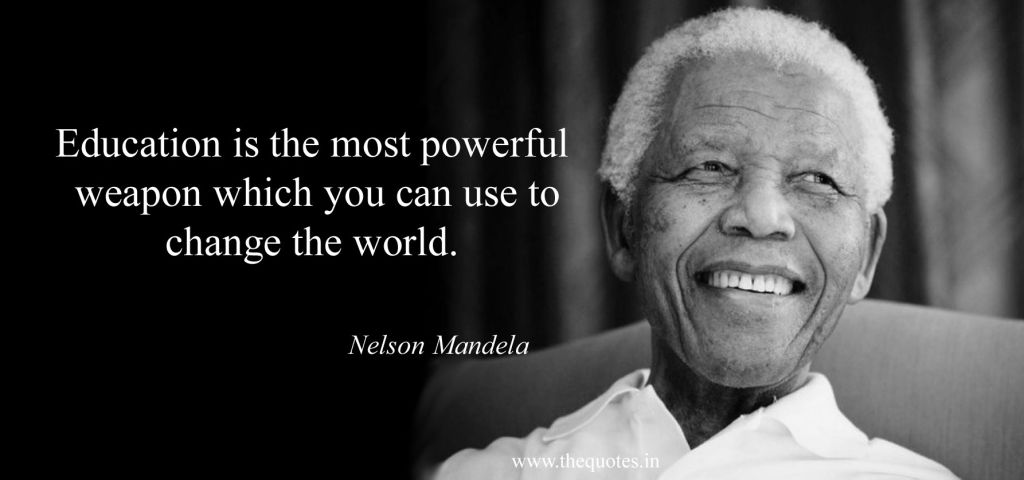
 X. Write an essay. (150-200 words)(See Appendix 2, Section III)