Заглавная страница Избранные статьи Случайная статья Познавательные статьи Новые добавления Обратная связь FAQ Написать работу КАТЕГОРИИ:  Археология Археология Биология Биология Генетика Генетика География География Информатика Информатика История История Логика Логика Маркетинг Маркетинг Математика Математика Менеджмент Менеджмент Механика Механика Педагогика Педагогика Религия Религия Социология Социология Технологии Технологии Физика Физика Философия Философия Финансы Финансы Химия Химия Экология ЭкологияТОП 10 на сайте Приготовление дезинфицирующих растворов различной концентрацииТехника нижней прямой подачи мяча. Франко-прусская война (причины и последствия) Организация работы процедурного кабинета Смысловое и механическое запоминание, их место и роль в усвоении знаний Коммуникативные барьеры и пути их преодоления Обработка изделий медицинского назначения многократного применения Образцы текста публицистического стиля Четыре типа изменения баланса Задачи с ответами для Всероссийской олимпиады по праву 
Мы поможем в написании ваших работ! ЗНАЕТЕ ЛИ ВЫ?
Влияние общества на человека
Приготовление дезинфицирующих растворов различной концентрации Практические работы по географии для 6 класса Организация работы процедурного кабинета Изменения в неживой природе осенью Уборка процедурного кабинета Сольфеджио. Все правила по сольфеджио Балочные системы. Определение реакций опор и моментов защемления |
The growth of higher educationСодержание книги
Поиск на нашем сайте
In 1960 there were less than twenty five universities in the whole of Britain. By 1980 there were more than forty-and by now there are well over a hundred institutions which have university status. The independence of Britain's educational institutions is most noticeable in universities. They make their own choices of who to accept on their courses. There is no right of entry to university for anybody. Universities normally select students on the basis of A-level results and an interview. Those with better exam grades are more likely to be accepted. But in principle there is nothing to stop a university accepting a student who has no A-levels at all and conversely, a student with top grades in several A-levels is not guaranteed a place. The academic year in Britain’s universities, Polytechnics, Colleges of Education is divided into three terms, which usually run from the beginning of October to the middle of December, from the middle of January to the end of March, and from the middle of April to the end of June or the beginning of July. The availability of higher education has increased greatly in the second half of the twentieth century. Nevertheless, finding a university place is not easy. Universities only take the better students. Because of this, and also because of the relatively high degree of personal supervision of students which the low ratio of students to staff allows, nearly all university students complete their studies - and in a very short time too! In England, Wales and Northern Ireland, it is only for modern languages and certain vocational studies that students take more than three years. In Scotland, four years is the norm for most subjects. Another reason for the low drop-out rate is that 'full-time' really means full-time. A large proportion of students live 'on campus', (or, in Oxford and Cambridge, 'in college') or in rooms nearby, which tends to mean that the student is surrounded by a university atmosphere. However, the expansion of higher education is putting a strain on these characteristics. More students means more expense for the state. The government's response has been to abolish the student grant which, at one time, covered most of a student’s expenses during the thirty-week teaching year. On top of that, most students have to pay fees. As a result, many more students cannot afford to live away from home. In 1975 it was estimated that 80% of all university students were non-local. This percentage is becoming lower and lower. In addition, more than a third of students now have part-time jobs, which means that they cannot spend so much time on their studies. A further result of increased numbers of students without a corresponding increase in budgets is that the student/staff ratio has been getting higher. All of these developments threaten to reduce the traditionally high quality of British university education. They also threaten to reduce its availability to students from low-income families.
full - time ['ful'taɪm] -изучающий университетский курс в полном объёме ratio ['reɪʃɪəu] сущ.; коэффициент отношения drop - out rate -образ. процент отсеявшихся put a strain - создать напряженность; осложнить; осложнять; вносить напряженность увеличить нагрузку; затруднить; затруднять abolish [ə'bɔlɪʃ]- аннулировать, отменять, упразднять grant - стипендия at one time -одно время II. 1. How many universities are there in Britain now? 2. Can you prove that British Universities are famous for their independence? 3. What are the A-levels? 4. How many semesters are there at British universities? 5. Why is it difficult to find a university place? 6. How long do the students study to get their first degree in England? 7. And what about Scotland? 8. What does the low ratio of students to staff allow? 9. What is the reason for the low drop-out rate in British Universities? 10. What threatens to reduce the traditionally high quality of British university education? III.
VI.
1) ___one time 2) ___ top of; 3) ___ a very short time; 4) ____ a result; 5) _______ the basis; 6) _____ principle; 7) because ___ 8) spend time ____
However, the expansion of higher education is putting a 1)__________ on these characteristics. More students means more 2)__________ for the state. The government's response has been to abolish the student3)_________ which, at one time, covered most of a student’s expenses during the thirty-week teaching4)_________. On top of that, most students have to pay fees. As a result, many more students cannot afford to live away from5)________. In 1975 it was estimated that 80% of all university students were non-local. This6)__________ is becoming lower and lower. In addition, more than a third of students now have part-time7)___________, which means that they cannot spend so much time on their studies. A further result of increased numbers of students without a corresponding increase in budgets is that the student/staff ratio has been getting higher. All of these developments threaten to reduce the traditionally high 8)___________ of British university education. They also threaten to reduce its availability to students from low-income families.
1. have nivsueriyt status. 2. right of neyrt 3. the caacmeid year 4. a university hmaotspeer 5. more students means more peexsne 6. threaten to reduce its vataialiliyb 7. high degree of personal vspnueriios 8. modern slagnugae
X.
XI. You have received a letter from your English-speaking pen friend, Tom…
Write a letter and answer his three questions. Write 100-120 words. Remember the rules of the letter writing. (Appendix 2, section 1) TEXT C.
I. Brainstorm. Answer the following questions: What is the Open University? What facts do you know about it?
The Open University The Open University (The OU) is a distance learning university. It was established in 1969. There are no previous qualifications required to study. You have to be aged 16 or over when your course starts but there is no upper age limit. The Open University is open to people, places, methods and ideas. With more than 180,000 students enrolled, it is the largest academic institution in the UK by student number. The OU provides university education to those wishing to continue higher education on a part-time and/or distance learning basis. The University is also popular with those who cannot physically attend a traditional university because they are disabled, abroad, in prison, serving in the armed forces, or looking after family members. The Open University's style of teaching is called 'supported open learning', also known as 'distance learning'. Open learning means that you will be learning in your own time by reading course material, working on course activities, including written and audio materials, the Internet, disc-based software and television programs on DVD. Supported means support from a tutor who provides feedback on students’ work and are generally available to them at face-to-face tutorials, by telephone, and/or on the Internet. The OU offers a large number of undergraduate qualifications, including certificates, diplomas, and Bachelor’s degrees, based on both level and quantity of study.
1) When was the university established? 2) Why is it called open? 3) How large is it? 4) How old should you be to enter it? 5) Who is it for? 6) Who is it popular with? 7) How is its style of teaching called and why? 8) What does the university provide its students with? 9) What qualifications does the OU offer? 10) How can the students from the OU communicate with their tutors?
The Open University's style of teaching is called 'supported open learning', also known as '1)__________ learning'. Open learning means that you will be learning in your own2)_____________ by reading course3)___________, working on course activities, including written and audio materials, the Internet, disc-based 4)________________ and television programs on DVD. Supported means support from a5)___________ who provides6)_____________ on students’ work and are generally available to them at face-to-face tutorials, by telephone, and/or on the Internet. The OU offers a large number of 7)_______________qualifications, including certificates, diplomas, and Bachelor’s degrees, based on both level and8)______________ of study.
1. a method of studying in which lectures are broadcast or lessons are conducted by correspondence, without the student needing to attend a school or college(d ___ l _____) 2. a series of lectures or lessons in a particular subject, leading to an examination or qualification (c _____) 3. information about reactions to a product, a person's performance of a task, etc., used as a basis for improvement(f____________) 4. (of two people) close together and facing each other(f___t__f ____) 5. a period of instruction given by a university or college teacher to an individual or very small group(t ______) 6. education at universities or similar educational establishments, especially to degree level(h__________e __________) 7. (of a person) having a physical or mental condition that limits their movements, senses, or activities(d ___________) 8. a point or level beyond which something does not or may not extend or pass (l ___________)
1) age tilmi 2) disc-based ftsoarew 3) nuqyaitt of study 4) family rmebesm 5) armed corfes 6) niscdtae learning 7) style of eagtcinh
1) no There are qualifications previous to study required 2) was 1969 It in established. 3) Open distance The University is a university learning 4) undergraduate number The large offers a of qualifications OU 5) teaching University called The 's of is Open 'supported open learning' style
a) age b) student c) Open d) undergraduate e) Bachelor’s f) audio g) disc-based h) higher
1) education 2) software 3) materials 4) number 5) University 6) qualifications 7) degree 8) limit
Открытый университет (ОУ) —университет открытого образования, основан указом её величества королевы Великобритании в 1969 году. Цель его создания — предоставить возможность получить образование людям, желающим учиться в удобном для них месте и в удобное время. ОУ — крупнейший университет Великобритании, в котором обучается около 200000 студентов (2003 г.). С момента основания более трёх миллионов студентов прошли обучение по программам ОУ. Административная часть университета расположена в Walton Hall, Милтон-Кинс в графстве Бэкингемшир, кроме этого ОУ располагает региональными офисами в тринадцати регионах Великобритании. В остальном мире (за пределами Евросоюза) ОУ работает через сеть образовательных партнеров, обеспечивающих учебный процесс по программам ОУ еще в более чем 50 странах.
Text D.
I.Brainstorm. Answer the following questions: 1. What types of the universities in Great Britain do you know? 2. Name some of them. 3. What are their peculiarities?
Types of universities There are no important official or legal distinctions between the various types of university in the country. But it is possible to discern a few broad categories. Oxbridge This name denotes the universities of Oxford and Cambridge, both founded in the medieval period. They are federations of semi-independent colleges, each college having its own staff, known as 'Fellows'. Most colleges have their own dining hall, library and chapel and contain enough accommodation for at least half of their students. The Fellows teach the college students, either one-to-one or in very small groups (known as 'tutorials" in Oxford and 'supervisions' in Cambridge). Oxbridge has the lowest student/staff ratio in Britain. Lectures and laboratory work are organized at university level. As well as the college libraries, there are the two university libraries, both of which are legally entitled to a free copy of every book published in Britain. Before 1970 all Oxbridge colleges were single-sex (mostly for men). Now, the majority admit both sexes.
|
|||||||||||||||||||||||||||||||||||||||||||||||||||||||||||||||||||||||||||||||||||||||||||||||
|
|
Последнее изменение этой страницы: 2020-12-17; просмотров: 348; Нарушение авторского права страницы; Мы поможем в написании вашей работы! infopedia.su Все материалы представленные на сайте исключительно с целью ознакомления читателями и не преследуют коммерческих целей или нарушение авторских прав. Обратная связь - 216.73.216.60 (0.007 с.) |

 After reading:
 Study the vocabulary:
 Answer the following questions:
 Say what these numbers from the text refer to:
 IV. Match the words with their definitions:
 V. Fill in the table with suitable info from the article
 VII. Fill in the appropriate words from the box into the gaps:
 VIII. Spelling: Unjumble the words in bold
 Search the Internet and find out more about modern trends in higher education in Great Britain. Share what you discover with your partner(s) in the next lesson.
 Read the text:
 VI. Put the words in the right order to form sentences: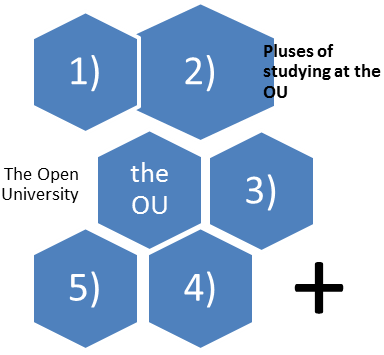
 IX. Translate from Russian into English:
 X. Work in pairs. You are a journalist reporting on the OU. Your partner is the OU tutor. Prepare questions and act out your interview.