Заглавная страница Избранные статьи Случайная статья Познавательные статьи Новые добавления Обратная связь FAQ Написать работу КАТЕГОРИИ:  Археология Археология Биология Биология Генетика Генетика География География Информатика Информатика История История Логика Логика Маркетинг Маркетинг Математика Математика Менеджмент Менеджмент Механика Механика Педагогика Педагогика Религия Религия Социология Социология Технологии Технологии Физика Физика Философия Философия Финансы Финансы Химия Химия Экология ЭкологияТОП 10 на сайте Приготовление дезинфицирующих растворов различной концентрацииТехника нижней прямой подачи мяча. Франко-прусская война (причины и последствия) Организация работы процедурного кабинета Смысловое и механическое запоминание, их место и роль в усвоении знаний Коммуникативные барьеры и пути их преодоления Обработка изделий медицинского назначения многократного применения Образцы текста публицистического стиля Четыре типа изменения баланса Задачи с ответами для Всероссийской олимпиады по праву 
Мы поможем в написании ваших работ! ЗНАЕТЕ ЛИ ВЫ?
Влияние общества на человека
Приготовление дезинфицирующих растворов различной концентрации Практические работы по географии для 6 класса Организация работы процедурного кабинета Изменения в неживой природе осенью Уборка процедурного кабинета Сольфеджио. Все правила по сольфеджио Балочные системы. Определение реакций опор и моментов защемления |
dhyānāya prayojanābhāvāt ..3.3.15..Поиск на нашем сайте SUTRA III. 3. 15.
आध्यानाय प्रयोजनाभावात्॥३.३.१५॥ ādhyānāya prayojanābhāvāt ..3.3.15..
…Adhyanaya, for the sake of meditation, … Prayojana, of any (other) purpose, … Abhavat, on account of the absence.
15. There being the absence of any other purpose (in the allegory of the Anandamaya Bird), it serves the purpose of meditation (for people of dull intellect). — 376.
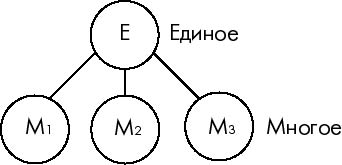
The allegory of the Bird in the Taittiriya Upanishad has no other object than to teach meditation on Brahman, in the form of a bird. The word ‘Adhyana’ means complete contemplation. The sense is this. The second Valli of the Taittiriya Upanishad opens with the statement «Brahma-vid apnoti param», ‘He who knows the Brahman attains the highest». Now Brahman is one, but he subsists in two forms: one his essential form, (the Anandamaya Krishna), and the second His Power or Energy forms (such as, those of Narayana, etc.). That Supreme Lord appears five-fold as Narayana, Vasudeva, Sankarshana, Pradyumna, and Aniruddha. This five-fold manifestation is not capable of being easily meditated upon, by people of dull brains. Therefore, for the sake of such persons, one blissful Brahman is figured as a Bird, with joy for its head, satisfaction and great satisfaction for its wings, etc. The allegory, therefore, serves a purpose; namely, it brings Brahman within the easy comprehension of these people of dull understanding, who cannot meditate on an all-pervading, blissful Lord. When by such concrete meditation, their intellect becomes capable of soaring to the higher heights, then the meditation becomes complete, and the man becomes a Brahmavid, and the word Vid here means «to meditate», and the Brahma vid is that person who can fully meditate on Brahman. In the previous part of the Taittiriya Upanishad are described the various Purushas such as Annamaya, Pranamaya, Manomaya, Vijnanamaya These various Purushas are all described as birds, with various attributes as their head, wings, etc. The object of the allegory is to give a clear conception of these various principles of man. Thus this physical body is the Annamaya man-bird, his head is the head of the bird, his two arms are the wings of the bird, etc. Similarly, the Pranamaya man or the Astral or Breath-man is allegorized as having the various breaths for its various parts. So on, with the Mind-man and the Understanding-man. Lastly, is described the Bliss-man or Brahman, with joy for its head, etc. Therefore, it has been well said that these attributes of «joy for its head», etc., are not to be combined in the general meditation on Brahman. This allegory in only figurative of the pure Brahman, who also appears with live members (namely, as Narayana, Vasudeva, Sankarshana, Pradyumna, and Aniruddha). U may be objected that Brahman is one and has not five members, as mentioned above, for there is no authority for it. To this objection we reply that there are various texts showing that Brahman has different members. Such as ‘…’ — (Gopala Purva Tapani). Though one, he manifest!) as many. ‘…’ — (Brahma Upanishad?). Being one, who appears as many. So also in the Chaturveda Shikha we have the following: He is the head. He is the right wing, He is the left wing, He is the body, He is the tail. So also in the Brihat Samhita: Narayana is the head, Pradyumna is the right wing. Aniruddha is the left wing, Vasudeva is the trunk, or Narayana is the trunk and Vasudeva is the head, and Sankarshana is the tail. Thus the one Lord, the Purushottama (the Supreme Man) sports in five different forma as a body and its members, as a part and the whole. But every member and every part is full, and perfect with all divine attributes, and none of these five members of the Lord is to be considered as higher or lower, as possessing greater or less lordliness, or as being opposed to each other. How can there be reasoning regarding that being who is above all reasoning, how can there be proof of Him who is proof-leas, (but the standard of every proof and the basis of all logical reasoning)?
|
||
|
|
Последнее изменение этой страницы: 2024-07-06; просмотров: 60; Нарушение авторского права страницы; Мы поможем в написании вашей работы! infopedia.su Все материалы представленные на сайте исключительно с целью ознакомления читателями и не преследуют коммерческих целей или нарушение авторских прав. Обратная связь - 216.73.217.114 (0.007 с.) |