Заглавная страница Избранные статьи Случайная статья Познавательные статьи Новые добавления Обратная связь FAQ Написать работу КАТЕГОРИИ:  Археология Археология Биология Биология Генетика Генетика География География Информатика Информатика История История Логика Логика Маркетинг Маркетинг Математика Математика Менеджмент Менеджмент Механика Механика Педагогика Педагогика Религия Религия Социология Социология Технологии Технологии Физика Физика Философия Философия Финансы Финансы Химия Химия Экология ЭкологияТОП 10 на сайте Приготовление дезинфицирующих растворов различной концентрацииТехника нижней прямой подачи мяча. Франко-прусская война (причины и последствия) Организация работы процедурного кабинета Смысловое и механическое запоминание, их место и роль в усвоении знаний Коммуникативные барьеры и пути их преодоления Обработка изделий медицинского назначения многократного применения Образцы текста публицистического стиля Четыре типа изменения баланса Задачи с ответами для Всероссийской олимпиады по праву 
Мы поможем в написании ваших работ! ЗНАЕТЕ ЛИ ВЫ?
Влияние общества на человека
Приготовление дезинфицирующих растворов различной концентрации Практические работы по географии для 6 класса Организация работы процедурного кабинета Изменения в неживой природе осенью Уборка процедурного кабинета Сольфеджио. Все правила по сольфеджио Балочные системы. Определение реакций опор и моментов защемления |
aṃśo nānāvyapadeśādanyathā cāpi dāśakitavāditvamadhīyata eke ..2.3.41..Поиск на нашем сайте SUTRA II. 3. 41.
अंशो नानाव्यपदेशादन्यथा चापि दाशकितवादित्वमधीयत एके॥२.३.४१॥ aṃśo nānāvyapadeśādanyathā cāpi dāśakitavāditvamadhīyata eke ..2.3.41..
… Amshah, part. …Nana, many, multifarious, difference. … Vyapadeshat, on account of the declaration. Anyatha, otherwise. .. Cha, and. … Api, also, … Dasa, servant, … Kitava, gambler. … Aditvam, and the rest. Adhiyate, record. … Eke, some (texts).
41. The soul is a part, because the Lord is described as having manifold relations with the soul, and also because some texts record him as identical with Brahman, like slaves and fisherman, etc. — 259.
COMMENTARY
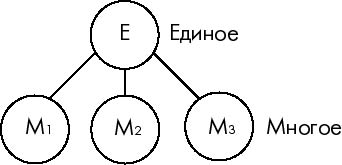
Jiva is a part of the Supreme Lord like the rays of the sun, which are separate from it. but which continually accompany it and which in a way are dependent upon it Why do you say so? Because the scripture describes the manifold relations of the soul with the Lord. Thus in the Subala Upanishad, we hear: «One God Narayana is the creator, is the destroyer, is the Divine, is the mother, is the father, is the brother, is the abode, is the refuge, is the friend, verily He, the Narayana, is the goal of all». So also in the Gita. IX., 18: The Path, Husband, Lord, Witness, Abode, Shelter, Lover, Origin, Dissolution, Foundation, Treasure-house, Seed imperishable. The scriptures declare manifold relation of the Lord with the soul, such as He is the creator, the Jiva is the created; He is the ruler, the other is the ruled; He is the support, the other is the supported; He is the Lord, the other is the servant; He is the lover, the other is the beloved; He is the object of attainment, the other is the attainer; and so on. On the other hand, the Atharvan Shruti also describes Him in another way, namely, His unity with Jiva, showing all-pervasiveness by which He pervades the Jiva, and thus the Jiva is looked upon as identical with Brahman. In other words, the texts declare both the difference of the Lord and the Jiva, and His unity with the Jiva in the sense of its pervading the Jiva. Thus the following text: Brahman is the slaves. Brahman is these fishermen, and Brahman is these Ramblers, etc. These declarations of unity would not be possible, it there were no difference in essential nature between God and Soul. No one can himself be the creator as well as the created, himself the pervader as well as the pervaded, nor the Supreme Lord who is the highest intelligence can be the slave, (he fisherman, etc. If He were to be so, then all those texts would be stultified which teach indifference to all worldly objects. Nor can it be said that the Lord limited by Maya is transformed into slave, fisherman, etc. Note: The Jiva is said to be a part or Amsha, of Brahman, because in that view only the apparently conflicting texts of the Upanishads can be reconciled. Home texts declare the difference of Brahman from the soul in very distinct terms. Brahman is the creator, soul the created, Brahman the ruler, soul the ruled, etc. While there are equally contrary texts, which declare Brahman to be identical with every soul, whether that of a slave, a fisherman or a gambler, etc., How are these texts to be reconciled? Some texts declare Nanatva or difference, others declare Anyatha or non-Nanatva or unity. According to Badarayana the reconciliation consists in considering the soul as an Amsha or part of the Lord, for in that view only, it is possible to consider it as different from the Lord, as well as non-different from Him. The soul is not a part of Brahman in the sense of a piece of stone cut off from a rock by the chisel. Jiva is not in that sense a cut off portion of the Lord, for if it were so then it would contradict all those texts which declare Brahman and soul to be incapable of division, and not liable to any change. Therefore, the Jiva is described as a part of Brahman, in the sense of being a subordinate member of Brahman, separate from Him, but related to Him, as the created, the ruled, the supported, etc. The subordinate relation of the soul to Brahman is established by the fact that all energies of the soul are from the Lord. As says the Smriti (Vishnu Purana, Book VI, Ch. 7, verses 61-64): The whole of this universe consisting of moveable and immoveable Jivas is energised by the energy of Vishnu, the Supreme Brahman. The energies are of three sorts, the divine energy which is the highest, and called the Vishnu Shakti, the Jiva energy which is lower than this and is called the Kshetrajna Shakti, and third the material energy called the Avidya or Karma energy. The word Amsha used in this Sutra is to be understood in a sense similar to that when we say the orb of Venus is a hundredth part of that of the moon. This definition of Amsha or part does not transgress the definition which says: «Part is the particular localization of a whole or a particular portion of one substance, inhering in that substance but not separate from that substance». Thus Brahman as possessor of all energies is one entire substance, while Jiva has a portion of this Brahma energy, and in that sense it is a part of Brahman, and thus is subordinate to Brahman. In other words, the word Amsha or part is to be taken in the sense of subordinate. When we say «Jiva is a part of Brahma» we mean «Jiva is subordinate to Brahman». The statements that the human soul is like a space enclosed in a jar, not different from the space outside the jar, are to be reconciled by holding that when the limiting condition or Upadhi is destroyed then there is the union of the two. It does not mean absolute identity. The phrases like «thou art that». etc., also declare that «the thou» is dependent upon «the that», for all its functions. In other words, the sentence «thou art that» means «all thy functions are dependent upon Brahman». In fact, all the previous texts and illustrations of the Chhandogya Upanishad, show this to be the real moaning of the great saying «thou art that»; it has no other meaning. Consequently, it follows that the Jiva is different from the Lord and this difference is manifest,; for one is the ruler, the other is the ruled; one is omnipresent, the other is atomic; and so on. The opposite view that the Jiva and the Lord are identical cannot be fairly deduced from the scriptural texts. In support of this view that the Jiva is a part of Brahman in the sense of being subordinate to Him, the author now quotes a Vedic Shruti.
|
||
|
|
Последнее изменение этой страницы: 2024-07-06; просмотров: 60; Нарушение авторского права страницы; Мы поможем в написании вашей работы! infopedia.su Все материалы представленные на сайте исключительно с целью ознакомления читателями и не преследуют коммерческих целей или нарушение авторских прав. Обратная связь - 216.73.216.195 (0.005 с.) |