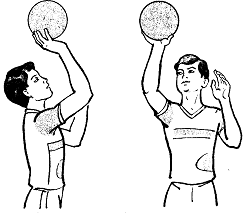
Заглавная страница Избранные статьи Случайная статья Познавательные статьи Новые добавления Обратная связь FAQ Написать работу КАТЕГОРИИ:  Археология Археология Биология Биология Генетика Генетика География География Информатика Информатика История История Логика Логика Маркетинг Маркетинг Математика Математика Менеджмент Менеджмент Механика Механика Педагогика Педагогика Религия Религия Социология Социология Технологии Технологии Физика Физика Философия Философия Финансы Финансы Химия Химия Экология ЭкологияТОП 10 на сайте Приготовление дезинфицирующих растворов различной концентрацииТехника нижней прямой подачи мяча. Франко-прусская война (причины и последствия) Организация работы процедурного кабинета Смысловое и механическое запоминание, их место и роль в усвоении знаний Коммуникативные барьеры и пути их преодоления Обработка изделий медицинского назначения многократного применения Образцы текста публицистического стиля Четыре типа изменения баланса Задачи с ответами для Всероссийской олимпиады по праву 
Мы поможем в написании ваших работ! ЗНАЕТЕ ЛИ ВЫ?
Влияние общества на человека
Приготовление дезинфицирующих растворов различной концентрации Практические работы по географии для 6 класса Организация работы процедурного кабинета Изменения в неживой природе осенью Уборка процедурного кабинета Сольфеджио. Все правила по сольфеджио Балочные системы. Определение реакций опор и моментов защемления |
samudāyobhayahetuke’pi tadaprāptiḥ ..2.2.18..Поиск на нашем сайте SUTRA II. 2. 18.
समुदायोभयहेतुकेऽपि तदप्राप्तिः॥२.२.१८॥ samudāyobhayahetuke’pi tadaprāptiḥ ..2.2.18..
.. Samudayah, the aggregate, all objects, … Ubhaya-hetuke, having two causes, namely, the external and the internal. … Api, also. … Tat-apraptih, there is non-establishment of that. There is not proved the world-order.
18. Even admitting that the whole aggregate has as its cause these two classes of objects, still there is not explained the world-order. — 191.
COMMENTARY
The above theory of the Bauddhas which classifies all objects under two hoods, one aggregate being called the external, the other internal, is not sufficient to explain the world-order. Because all aggregates are unintelligent and there is no permanent intelligence admitted by the Bauddhas which can bring about this aggregation. According to the Bauddhas every tiling is momentary in its existence, there is no permanent intelligent substance which brings about the conjunction of these Skandhas. If it be said they come together of their own internal motion, then the world would become eternal, for Skandhas being eternal, and possessing motion of their own, they will be constantly bringing about creation. Thus this theory is untenable. The holder of the Buddhistic doctrine here says: In our system there is a concatenation of cause and effect, beginning with Avidya. Note: Thus through Avidya arises desire, aversion, etc., which compose the Samskara Skandha. From this arises cognition or the kindling of the mind which composes Vijnana Skandha. From this arises the six sense organs which compose the Vedana Skandha. And from sensation again arises Avidya. Thus the circle goes on. We Buddhists hold this theory of the circle of causation, and as this circle is not refuted by any one and is admitted by all and as it moves like the Persian wheel, by which water is drawn from the well, so our theory is not open to any objection raised by you. Thus Avidya produces Samskara, from which comes out Vijnana, Nama-rupa, the body, the touch, the sentiency, the thirst (Trishna) the activity, the birth, the species, the decay, the death, the grief, the lamentation, the pain, and despondency. Note: These are all technical terms of the Buddhists. Avidya means the idea of permanency in a thing which is really impermanent, such as the idea that the flame is permanent while it is momentarily changing. From this Avidya arise desire, aversion, etc., which constitute the Samskara Skandha. From this Samskara Skandha arises that vague consciousness which exists in prenatal condition, and this consciousness is called Vijnana. From this Vijnana arises the four elements earth, water, fire and air, which constitute the body of all beings, and this is called Nama. From this Nama (the four elements) are formed the bodies of all beings and which is called Rupa, because the bodies are either black or white. This embryonic body is called Nama-Rupa. The embryo then develops the six senses called the Sat-ayatana. From these senses, by their mutual contact, arises Sparsha, touch or contact, with external objects. From this contact with external objects arises feeling or Vedana. From this Vedana arises desire or thirst, whence successively arise Upadana, etc., mentioned above. Thus goes on this eternal cycle of causation. For further explanation see note to the next Sutra. This theory is refuted by the author in the next Sutra.
|
||
|
|
Последнее изменение этой страницы: 2024-07-06; просмотров: 54; Нарушение авторского права страницы; Мы поможем в написании вашей работы! infopedia.su Все материалы представленные на сайте исключительно с целью ознакомления читателями и не преследуют коммерческих целей или нарушение авторских прав. Обратная связь - 216.73.216.195 (0.005 с.) |