Заглавная страница Избранные статьи Случайная статья Познавательные статьи Новые добавления Обратная связь FAQ Написать работу КАТЕГОРИИ:  Археология Археология Биология Биология Генетика Генетика География География Информатика Информатика История История Логика Логика Маркетинг Маркетинг Математика Математика Менеджмент Менеджмент Механика Механика Педагогика Педагогика Религия Религия Социология Социология Технологии Технологии Физика Физика Философия Философия Финансы Финансы Химия Химия Экология ЭкологияТОП 10 на сайте Приготовление дезинфицирующих растворов различной концентрацииТехника нижней прямой подачи мяча. Франко-прусская война (причины и последствия) Организация работы процедурного кабинета Смысловое и механическое запоминание, их место и роль в усвоении знаний Коммуникативные барьеры и пути их преодоления Обработка изделий медицинского назначения многократного применения Образцы текста публицистического стиля Четыре типа изменения баланса Задачи с ответами для Всероссийской олимпиады по праву 
Мы поможем в написании ваших работ! ЗНАЕТЕ ЛИ ВЫ?
Влияние общества на человека
Приготовление дезинфицирующих растворов различной концентрации Практические работы по географии для 6 класса Организация работы процедурного кабинета Изменения в неживой природе осенью Уборка процедурного кабинета Сольфеджио. Все правила по сольфеджио Балочные системы. Определение реакций опор и моментов защемления |
Text 8. Security protectionСодержание книги
Поиск на нашем сайте Transportation Security Administration (TSA) This is about the approach of the Transportation Security Administration (TSA) to security protection. The TSA protects the Nation’s transportation systems to ensure freedom of movement for people and commerce.
TSA is constantly moving forward its technology usage. Their highly trained workforce combined with technology helps close down vulnerabilities. Their strategy involves more than just screening of all carry-on and checked baggage. The TSA use careful analysis of intelligence to determine where best to deploy our technology resources at airports. Daily employees let us protect the airports. The suite of technology has grown considerably in the years since TSA took over airport security Everyone remembers the Walk through metal detector, which still serves an important function at the checkpoint. You may notice some new and unfamiliar machines at your local airports. Here you can learn about emerging screening technologies.
Biometrics
Retinal scans
Fingerprint identification.
A few years ago these things seemed like something out of a science fiction movie. Today, they continue to grow as important parts of our risk-based approach to security. Biometric identification allows us to verify a person by using unique set of identifiers – whether fingerprints, iris scans or a combination of the two. Bottled Liquid Scanners Bottled liquids scanner (BLS) screening systems are screening technologies that are used by TSO to detect potential liquid threats which may be contained in passenger's property and to differentiate liquid explosives from common, benign liquids. TSA utilizes this technology at checkpoints, where
It is used primarily to screen medically necessary liquids in quantities larger than three ounces. Next generation bottled liquids scanner systems have the ability to detect a wider range of explosive materials and use light waves to screen sealed containers for explosive liquids. TSA recently deployed 500 next generation BLS units to airports nationwide. TSA is currently testing new liquid screening systems with enhanced detection capabilities. In 2006 TSA issued new rules concerning liquids. After conducting extensive research, TSA determined small amounts of liquids are not a threat. On September 26, 2006, TSA permitted small amounts of liquids, gels and aerosols in travel size containers, and exempt baby formula/milk/juices, medicines, and other medically-required liquids. CastScope
CastScope was deployed to airports based on the airport's proximity to military hospitals or large rehabilitation facilities that serve amputees, sports events for disability groups, vacation distinctions utilized by amputees and in airports that see large volumes of military severely injured. In those airports where CastScope is available, screening using this technology is mandatory. Some particular features of this type of scanning; 1. It was designed to supplement the walkthrough metal detectors for passengers with casts or prostheses that may alarm because of the metallic components of the devices 2. Each scan takes approximately 3 seconds, 3. A lot of passengers wonder how much radiation exposure is produced from 1 scan of the CastScope and whether such scanning is safe. One scan is equivalent to the exposure each person receives every 15 minutes from naturally occurring background radiation. So the CastScope is verified to be in compliance with safety standards. 4. This screening is not intrusive. It is not necessary to raise or remove any article of clothing that may be covering that cast or prosthesis to image the area where the prosthetic, cast are worn. Explosive Detection System
TSA is able to meet this requirement by relying on Explosive Detection System (EDS) machines. Through a sophisticated analysis of each checked bag, the EDS machines can quickly determine if a bag contains a potential threat or not, if a weapon or explosive is detected, the machines alert our security officers. In some cases, the alarm is quickly resolved and in others law enforcement and the bomb squad may be called. Explosives Trace Detection
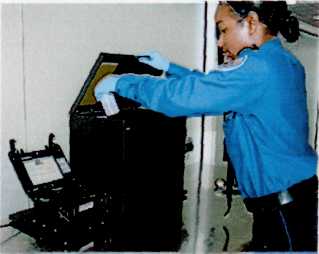
TSA is expanding its use of ETD technology in airports to keep passengers safe. Passengers may experience screening of their hands using an ETD swab at airports. This screening measure could take place at the security checkpoint, in the checkpoint queue, or boarding areas. To ensure the health of travelers, screening swabs are disposed of after each use. Since ETD is used on a random basis, passengers should not expect to see the same thing at every airport or each time they travel. Paperless Boarding Pass Pilot The paperless boarding pass pilot enables passengers to download their boarding pass on their cell phones. This innovative approach streamlines customer experience while heightening the ability to detect fraudulent boarding passes,
Threat Image Projection But not everything depends on hi-tech devices. Training of the staff is equally essential.
These tests allow us to evaluate individual performance and shape our training programs appropriately. WHAT TO DO: 1. Answer the following questions:
1. What security measures are taken at airports? 2. What is a walkthrough metal detector like? What can trigger the alarm? 3. How can the identity of a passenger be confirmed? 4. Is it common to carry out a pat-down in private or in public view? 5. Is baggage always X-ray screened? 6. How do you usually clear security control? 7. Do you ever feel nervous during this procedure?
|
|||||
|
|
Последнее изменение этой страницы: 2021-04-12; просмотров: 127; Нарушение авторского права страницы; Мы поможем в написании вашей работы! infopedia.su Все материалы представленные на сайте исключительно с целью ознакомления читателями и не преследуют коммерческих целей или нарушение авторских прав. Обратная связь - 216.73.216.195 (0.006 с.) |

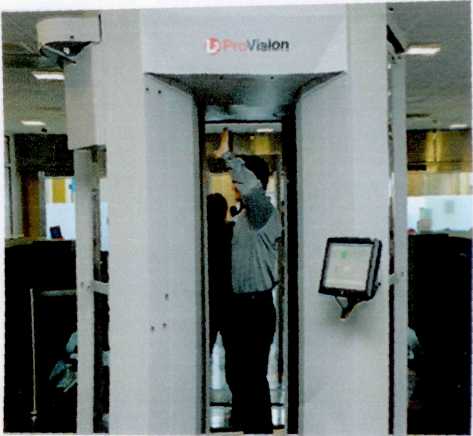 TSA understands that threat to aviation security continue to evolve. They are men sophisticated and more complex than ever before. TSA must use every tool at our disposal to address those threats and develop method of combating them. The use of new and innovative technology helps us stay ahead of those intent on harming our nation.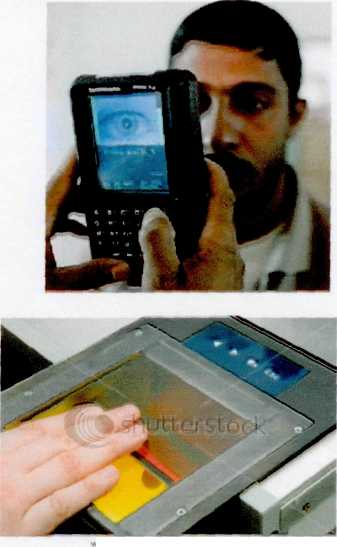
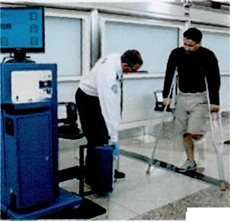 CastScope technology provides security officers with a miens to ensure that a cast or prosthesis = prosthetic appliance does not contain a concealed threat while maintaining the dignity and privacy of the passenger.
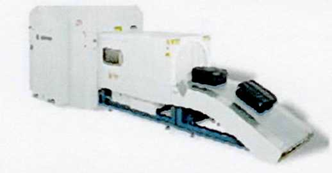 TSA screens every bag - 100% - of all bags placed on an airplane, whether taken as carry-on or checked with an airline. With nearly 2 million people flying each day, it's a Herculean task.
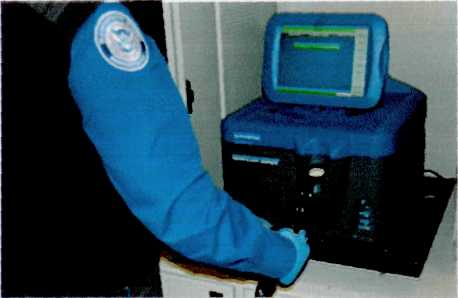 Explosives Trace Detection (ETD) is technology used at security checkpoints to screen carry-on baggage and passengers for traces of explosives. Officers may swab a piece of luggage or passenger hands and then use ITD technology to test for explosives. The swab is placid Inside the ETD unit which analyzes the content for the presence of potential explosive residue.
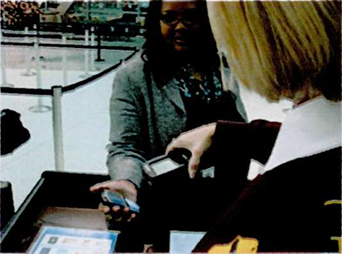 Each paperless boarding pass is displayed as an encrypted two-dimensional bar code along with passenger and flight information, TSA security officers use scanners to validate the authenticity of the boarding pass at the checkpoint and to check whether the name on the boarding pass matches the name on the ID.
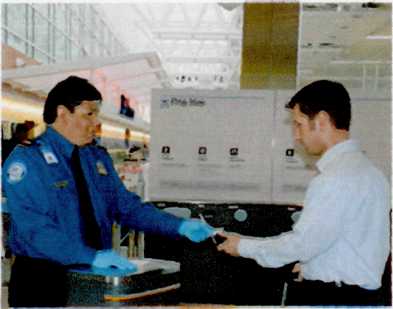 In addition to the classroom training, TSA uses on-the-job training to keep our security officers' skills sharp. Through the daily use of a Threat Image Projection (TIP) software program, our security officers are routinely tested on their ability to detect weapons and explosives.